

What is Acute Myeloid Leukaemia?
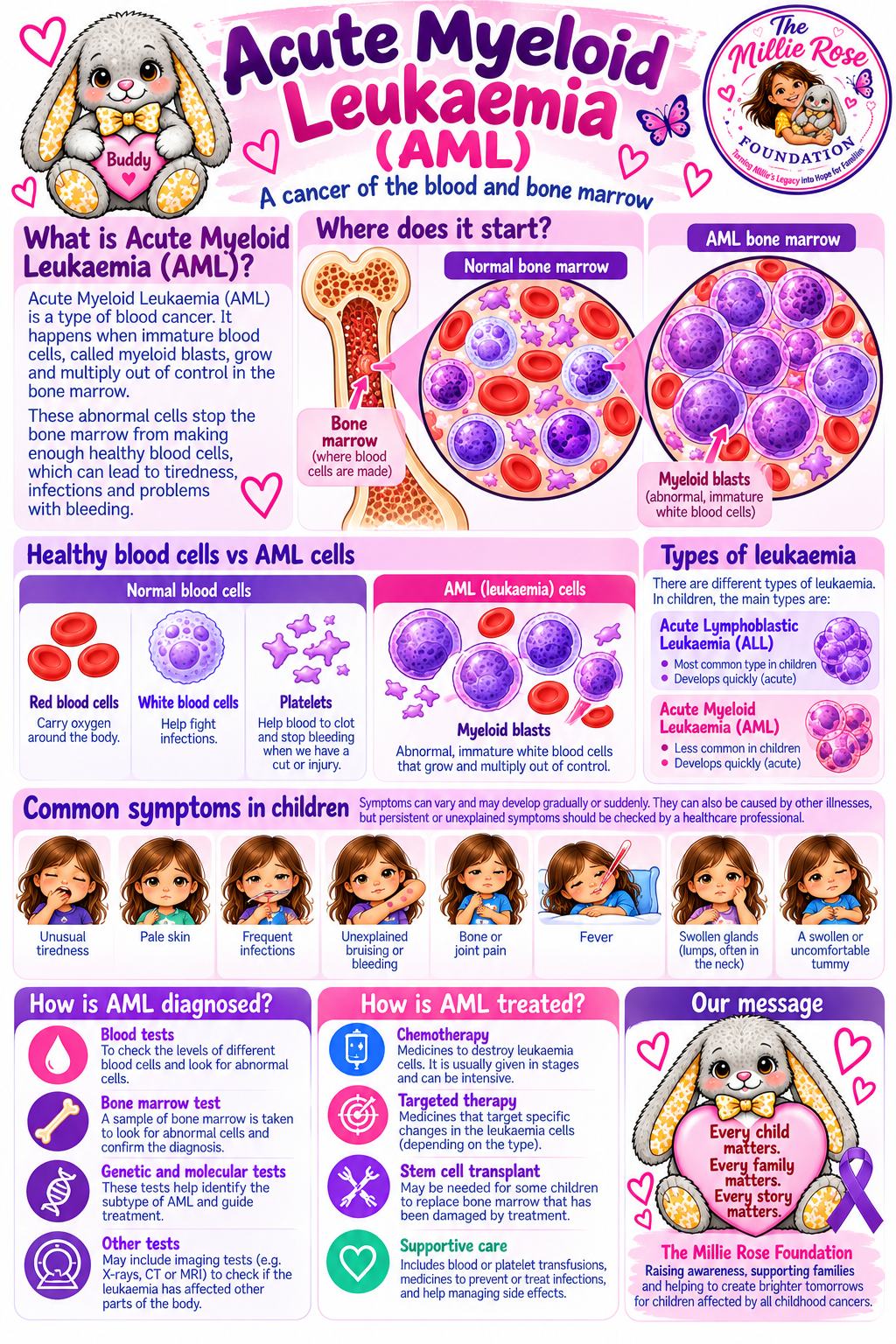
Acute Myeloid Leukaemia, often shortened to AML, is a type of blood cancer.
To understand AML, it helps to know a little about how blood is made.
Inside our bones is a soft tissue called bone marrow. It produces the blood cells our bodies need to stay healthy:
-
Red blood cells carry oxygen around the body.
-
White blood cells help fight infections.
-
Platelets help blood clot and stop bleeding.
AML develops when immature blood cells, known as myeloid blasts, grow and multiply uncontrollably. Instead of developing into mature blood cells that work properly, these abnormal cells build up in the bone marrow.
This makes it harder for the bone marrow to produce enough healthy blood cells. As a result, a child may become tired, develop infections more easily or bruise and bleed more than usual.
What does “acute myeloid” mean?
The name can sound complicated, but each word has a meaning.
-
Acute means the cancer can develop quickly.
-
Myeloid refers to the family of blood cells affected.
-
Leukaemia is a cancer that begins in blood-forming tissues, including the bone marrow.
AML can affect children and adults. Although it is less common in children than some other types of childhood leukaemia, it is a serious condition that requires specialist care.
There are different subtypes of AML. Doctors use tests to identify the particular type and understand its characteristics, helping them decide on the most suitable treatment.
What causes AML?
In AML, changes occur in the genetic instructions inside developing blood cells. These changes affect how the cells grow, mature and behave.
Doctors do not always know why these changes happen. In many children, there is no clear reason why they developed AML.
It is important for families to know that parents have not caused their child's leukaemia through something they did or did not do.
AML is not infectious, so it cannot be caught from another person or passed on through everyday contact.
What symptoms can AML cause in children?
AML can develop over a relatively short period, and its early symptoms may look like those of other childhood illnesses.
Possible symptoms include:
-
Unusual tiredness or weakness.
-
Pale skin.
-
Frequent infections or infections that are difficult to recover from.
-
A high temperature or fever.
-
Unexplained bruising.
-
Nosebleeds or bleeding gums.
-
Bleeding that takes longer than usual to stop.
-
Small red or purple spots on the skin.
-
Bone or joint pain.
-
Swollen glands.
-
A swollen or uncomfortable tummy.
Not every child will experience all these symptoms. Some may initially seem to have an ordinary infection, which can make the illness difficult to recognise at first.
These symptoms can have many causes and do not automatically mean a child has leukaemia. However, persistent or unexplained symptoms should be checked promptly by a healthcare professional. Seek urgent medical advice if you are concerned.
How is AML diagnosed?
If a doctor suspects leukaemia, tests are needed to understand what is happening and confirm the diagnosis.
Blood tests
Blood tests measure the different types of blood cells and can identify abnormalities that may suggest leukaemia.
Bone marrow tests
A sample of bone marrow is usually taken and examined to look for abnormal cells and help confirm the diagnosis.
Genetic and molecular tests
Specialist tests can identify changes within the leukaemia cells. These results help doctors determine the subtype of AML and plan treatment.
The medical team may also carry out other investigations to assess the child's health and decide on the best approach to care.
How is AML treated?
Treatment for childhood AML is planned by a specialist paediatric cancer team. The exact treatment depends on the subtype of AML, the child's individual circumstances and how the leukaemia responds.
Chemotherapy
Chemotherapy is the main treatment for childhood AML. It uses medicines to destroy leukaemia cells.
Treatment is usually given in stages, with the aim of bringing the leukaemia under control and destroying any remaining abnormal cells. It is often intensive, and children may need to spend significant periods in hospital.
Targeted medicines
Some children may be offered targeted medicines that act on particular features of their leukaemia cells. Whether these medicines are suitable depends on the type of AML and its characteristics.
Stem cell transplant
Some children may need a stem cell, or bone marrow, transplant. This can help restore the body's ability to produce healthy blood cells after intensive treatment.
A transplant is not necessary for every child. The specialist team will explain whether it may be appropriate.
Supportive care
Supportive care is an important part of treatment. It may include blood or platelet transfusions, medicines to prevent or treat infections, and help managing side effects.
The team will monitor the child closely throughout treatment and provide support for their physical and emotional needs.
What does AML mean for families?
A childhood cancer diagnosis affects the whole family, not just the child receiving treatment.
Parents and carers may suddenly find themselves facing hospital stays, unfamiliar medical language, difficult decisions and uncertainty about the future. Everyday routines can change, and even simple things may become more complicated.
Siblings may struggle to understand what is happening. They might feel frightened, confused or worried about their brother or sister, while also needing reassurance and attention themselves.
Every family responds differently. There is no right or wrong way to feel when facing a diagnosis like AML.
Families deserve clear information, compassionate care and support throughout the journey, including after treatment has finished.
Why are awareness and research important?
Research helps doctors understand AML, improve treatments and learn how to reduce the effects of treatment wherever possible.
Because AML has different subtypes, research is also important in helping specialists tailor treatment to the individual child.
Raising awareness helps people understand that childhood cancer is not one single disease. There are different types, each with its own challenges, and every child deserves access to appropriate care and support.
Behind every diagnosis is a child with their own personality, interests, hopes and dreams. They are so much more than their illness.
How The Millie Rose Foundation can help
The Millie Rose Foundation was created in memory of Millie Rose Hedley, with the aim of turning her legacy into hope for families.
We want to raise awareness of childhood cancers, support families affected by a diagnosis and help create a community where people feel less alone.
By sharing information about cancers such as AML, we hope to help more people understand the challenges families face and the importance of continued research.
We believe compassion, inclusion and understanding matter. Families should feel able to ask questions, seek support and talk about their experiences without fear of judgement.
If your child has been diagnosed with AML, their specialist team can guide you towards appropriate medical, emotional and practical support.
A final message
Acute Myeloid Leukaemia is a serious childhood cancer, but children are not defined by their diagnosis.
They are children who deserve love, comfort, opportunities to make memories and the best care possible. Their families deserve kindness, understanding and support through every stage of their journey.
At The Millie Rose Foundation, we will continue to raise awareness of childhood cancers and stand alongside families who are affected by them.
Every child matters. Every family matters. Every story matters.
The Millie Rose Foundation — turning Millie’s legacy into hope for families.
Add comment
Comments