

Understanding Childhood Cancers
At The Millie Rose Foundation, we believe every child and family affected by childhood cancer deserves support, understanding and access to the information they need. Raising awareness of childhood cancers is an important part of our mission, helping families recognise potential symptoms and understand the challenges they may face.
This blog is for awareness and general information only. It is not a substitute for medical advice, diagnosis or treatment. For advice about an individual child, please speak to their medical team.

Leukaemia
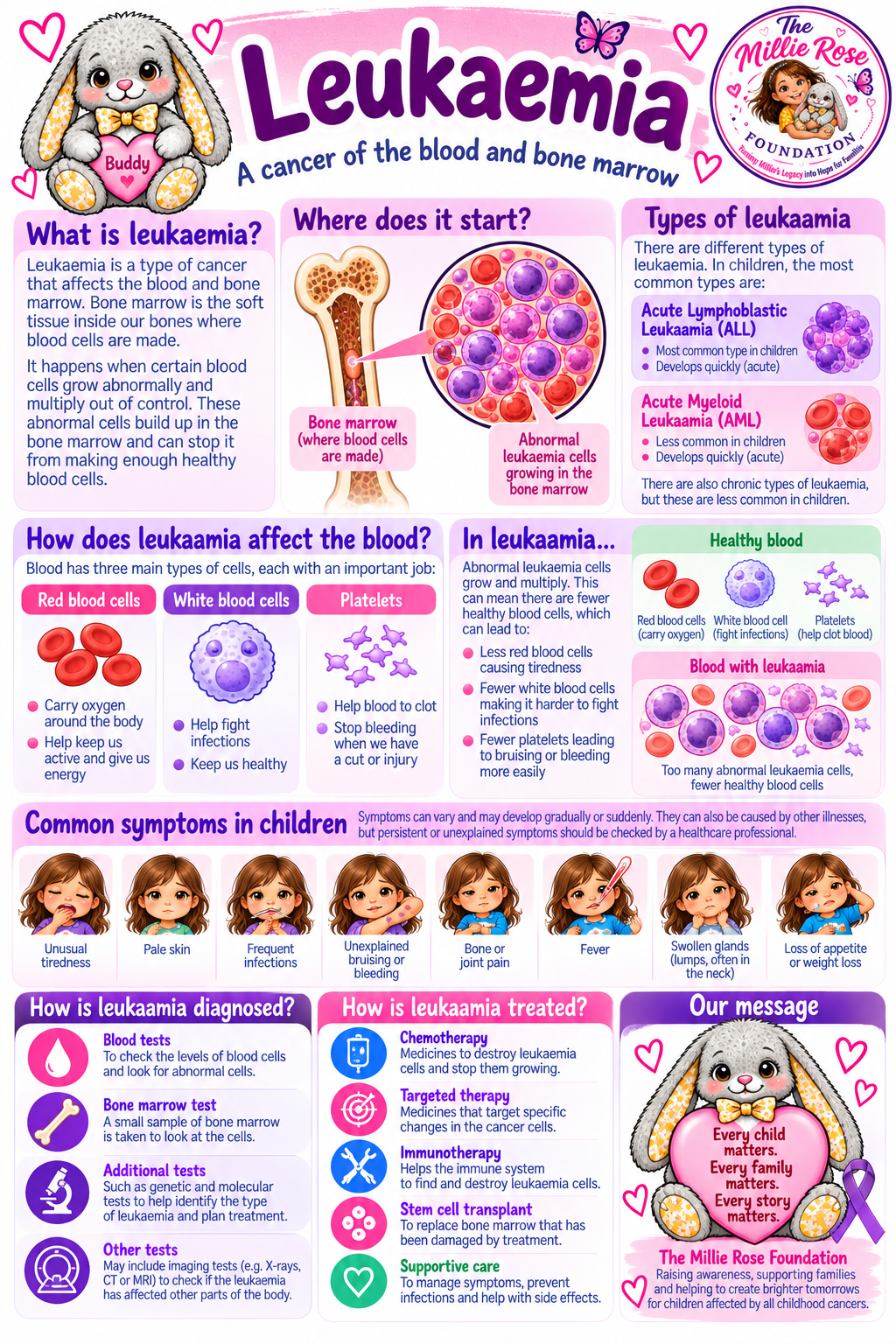
Leukaemia is a type of cancer that affects the blood and bone marrow. Bone marrow is the soft tissue inside our bones where blood cells are made.
Acute Lymphoblastic Leukaemia
Acute Lymphoblastic Leukaemia, often shortened to ALL, is a type of blood cancer that affects immature white blood cells.
Chronic Myeloid Leukaemia
Chronic Myeloid Leukaemia, often shortened to CML, is a type of cancer that affects the blood and bone marrow.
Acute Myeloid Leukaemia
Acute Myeloid Leukaemia, often shortened to AML, is a type of blood cancer.
Brain and Central Nervous System Tumours
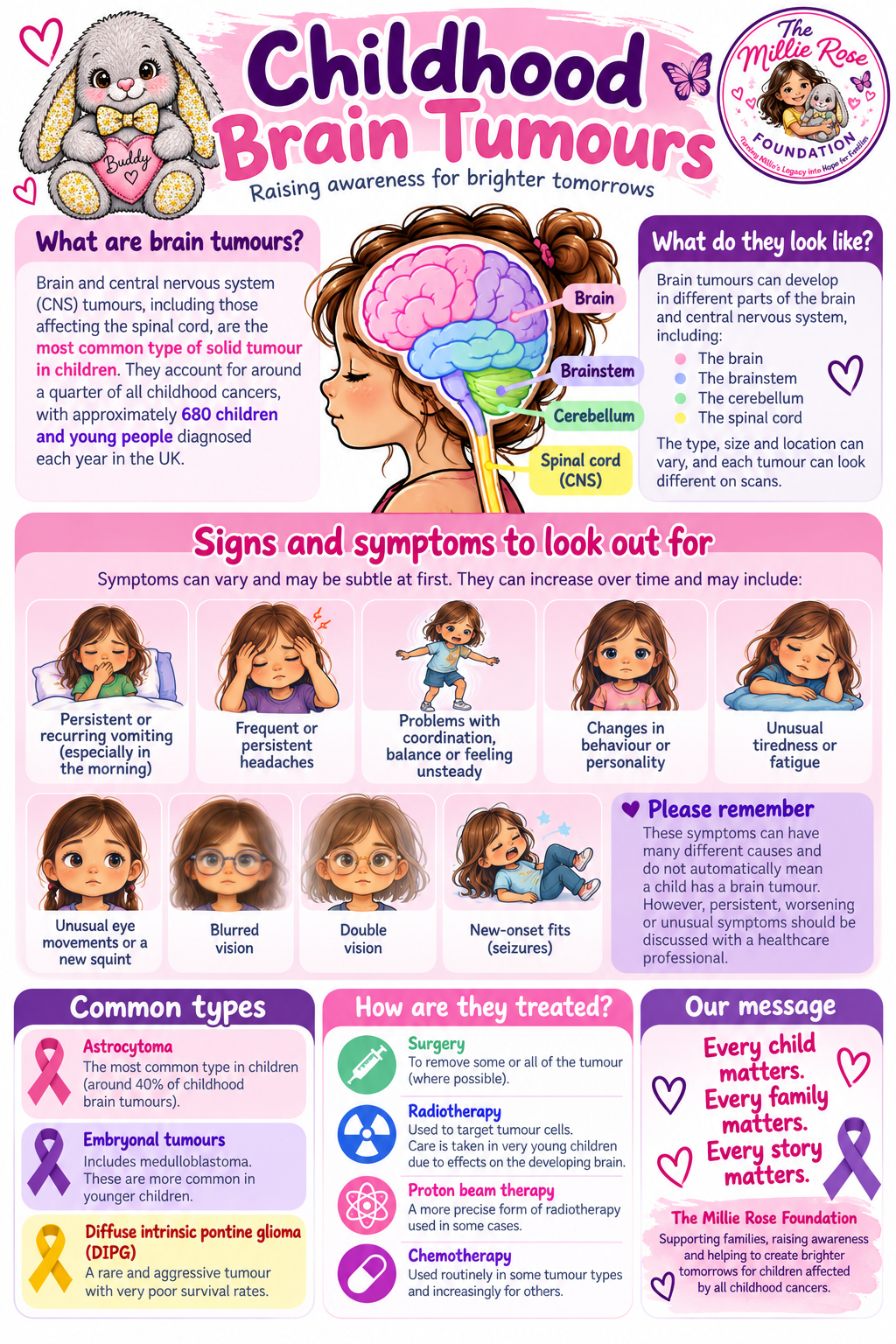
Brain and central nervous system (CNS) tumours, including those affecting the spinal cord, are the most common type of solid tumour in children. They account for around a quarter of all childhood cancers, with approximately 680 children and young people diagnosed each year in the UK.
Astrocytoma
An astrocytoma is a type of brain or spinal cord tumour that can affect children and young people. It develops from cells called astrocytes, which are star-shaped cells that help support, protect and nourish the nerve cells in the brain. When changes occur in these cells, they can begin to grow abnormally and form a tumour.
Embryonal Tumours
Embryonal tumours are a group of rare brain and central nervous system (CNS) tumours that can affect children and young people. They develop from immature cells that remain from the early stages of development in the womb. These cells would normally develop into different types of cells as a baby grows, but sometimes changes occur that cause them to grow abnormally and form a tumour.
Diffuse Intrisic Glioma
DIPG stands for Diffuse Intrinsic Pontine Glioma.
Malignant Rhabdoid Tumour
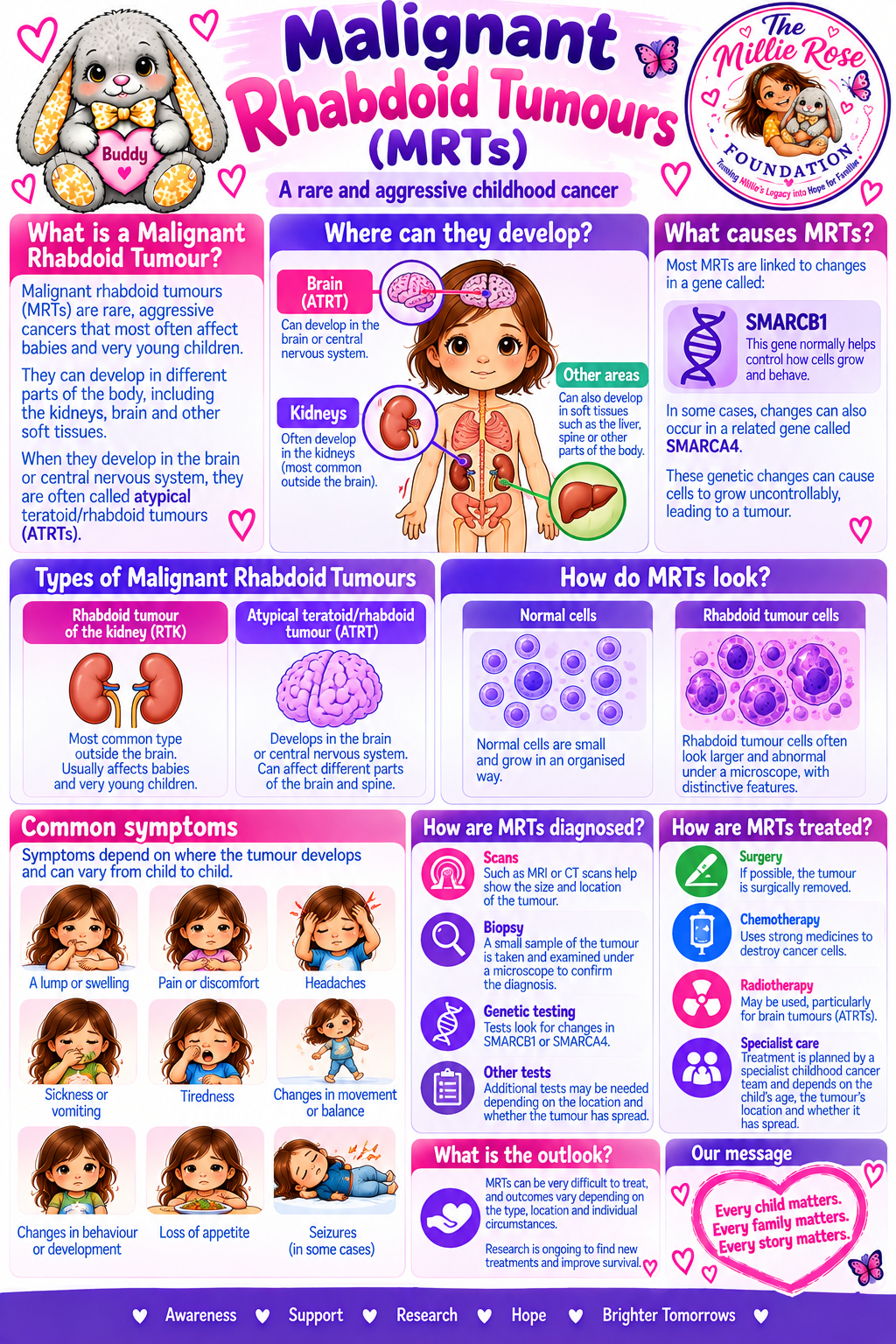
Malignant rhabdoid tumours are rare, aggressive cancers that most often affect babies and very young children. They can develop in different parts of the body, including the kidneys and soft tissues. When they develop in the brain or central nervous system, they are often called atypical teratoid/rhabdoid tumours (ATRTs).
Renal Rhabdoid Tumour
The word renal means relating to the kidneys. Our kidneys are two bean-shaped organs that help filter waste and extra water from the blood, producing urine.
Atypical Teratoid Tumour
Our brain and spinal cord make up the central nervous system. They help control how we think, move, feel, learn and understand the world around us.
Extra Renal Rhabdoid Tumours
The word extra-renal means outside the kidney. A rhabdoid tumour is a cancer that can develop in different parts of the body.
What is Neuroblastoma
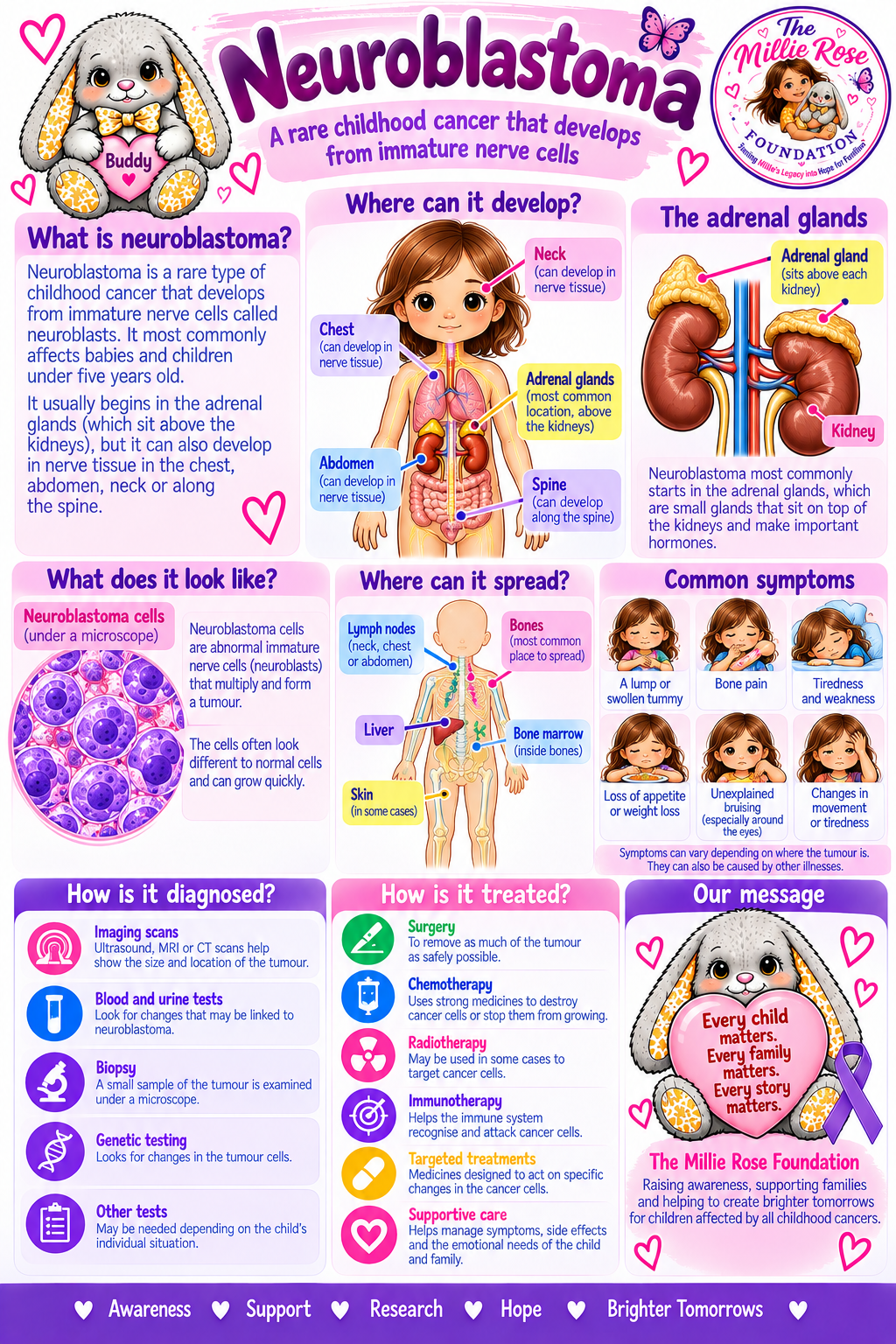
Neuroblastoma is a rare type of childhood cancer that develops from immature nerve cells called neuroblasts. These cells are part of the body's developing nervous system, which helps control functions such as movement, breathing, heart rate and digestion.
Type 1
What is Type 1 Neuroblastoma?
Type 2
What is Type 2 Neuroblastoma? Neuroblastoma is a rare type of childhood cancer that develops from immature nerve cells. It most commonly affects babies and children under five years old. The term Type 2 neuroblastoma may be used in some older classification systems, but it is not a universally recognised modern classification. The exact meaning can depend on the medical system or source using the term. Neuroblastoma often begins in the adrenal glands above the kidneys, but it can also develop in the chest, abdomen, neck or along the spine. What happens in the body? Neuroblastoma develops when immature nerve cells grow abnormally and form a tumour. Some tumours grow slowly, while others can grow quickly and spread to other parts of the body, such as the bones, liver, lymph nodes or bone marrow. Doctors use scans and specialist tests to understand the tumour and decide which treatment is most suitable for each child. What are the symptoms? Symptoms depend on where the tumour develops and whether it has spread. They may include: A lump or swelling in the tummy, chest or neck. Tummy pain or discomfort. Unusual tiredness or weakness. Loss of appetite or unexplained weight loss. Bone pain. Unexplained bruising, sometimes around the eyes. These symptoms can have many causes and do not automatically mean a child has cancer. Persistent or unexplained symptoms should be discussed with a healthcare professional. How is neuroblastoma diagnosed? Doctors may use several tests, including: Scans: Ultrasound, MRI, CT or specialised scans to locate the tumour. Blood and urine tests: To look for substances associated with neuroblastoma. Biopsy: A sample of the tumour examined under a microscope. Genetic testing: To identify changes that may help doctors understand the tumour and guide treatment. Not every child will need every test. How is it treated? Treatment depends on the child's age, the tumour's location, its biological features and whether it has spread. Treatment may include surgery, chemotherapy, immunotherapy, radiotherapy or other specialist treatments. Some children may need close monitoring rather than immediate intensive treatment. Every child's treatment plan is individual, and their specialist team will explain the available options. Raising awareness 💗 At The Millie Rose Foundation, we believe every child deserves the best possible care and every family deserves compassion and support. By raising awareness of childhood cancers such as neuroblastoma, we hope to improve understanding, encourage continued research and support families facing difficult diagnoses. In memory of Millie Rose Hedley, we remain committed to raising awareness of all childhood cancers and helping families feel less alone. 💗 Every child matters. Every family matters. Every story matters. Please note: “Type 2 neuroblastoma” is not a universally used modern classification. If you have seen this term in a particular medical source, its exact meaning may depend on the classification being used. This blog is for general awareness and is not a substitute for medical advice.
Type 3
What is Type 3 Neuroblastoma? Neuroblastoma is a rare type of childhood cancer that develops from immature nerve cells. It most commonly affects babies and children under five years old. The term Type 3 neuroblastoma is not a universally recognised modern classification. Older classification systems and different medical sources may use terminology differently, so the exact meaning depends on the source. Neuroblastoma usually begins in the adrenal glands, which sit above the kidneys, but it can also develop in the chest, abdomen, neck or along the spine. What happens in the body? Neuroblastoma develops when immature nerve cells grow abnormally and form a tumour. Some tumours grow slowly, while others can grow quickly and spread to other parts of the body, including the bones, liver, lymph nodes or bone marrow. Doctors carry out specialist tests to understand how the tumour may behave and decide which treatment is most appropriate for the child. What symptoms can occur? Symptoms depend on where the tumour develops and whether it has spread. They may include: A lump or swelling in the tummy, chest or neck. Tummy pain or discomfort. Unusual tiredness or weakness. Loss of appetite or unexplained weight loss. Bone pain. Unexplained bruising, sometimes around the eyes. These symptoms can have many causes and do not automatically mean a child has cancer. Persistent or unexplained symptoms should be discussed with a healthcare professional. How is neuroblastoma diagnosed? Doctors may use several tests, including: Imaging scans: Ultrasound, MRI, CT or specialised scans to locate the tumour. Blood and urine tests: To look for substances associated with neuroblastoma. Biopsy: A sample of the tumour examined under a microscope. Genetic testing: To identify changes that can help doctors understand the tumour and guide treatment. Not every child will need every test. How is it treated? Treatment depends on the child's age, the tumour's location, its biological features and whether it has spread. Treatment may include surgery, chemotherapy, immunotherapy, radiotherapy or other specialist treatments. Some children may need close monitoring, while others require a combination of treatments. Every child's treatment plan is individual and is carefully managed by a specialist team. Raising awareness 💗 At The Millie Rose Foundation, we believe every child deserves the best possible care and every family deserves compassion and support. By raising awareness of childhood cancers such as neuroblastoma, we hope to improve understanding, encourage continued research and support families facing difficult diagnoses. In memory of Millie Rose Hedley, we remain committed to raising awareness of all childhood cancers and helping families feel less alone. 💗 Every child matters. Every family matters. Every story matters. Please note: “Type 3 neuroblastoma” is not a universally used modern classification. If you have seen this term in a particular medical source, its exact meaning may depend on the classification being used. This blog is for general awareness and is not a substitute for medical advice.
What is Lymphoma
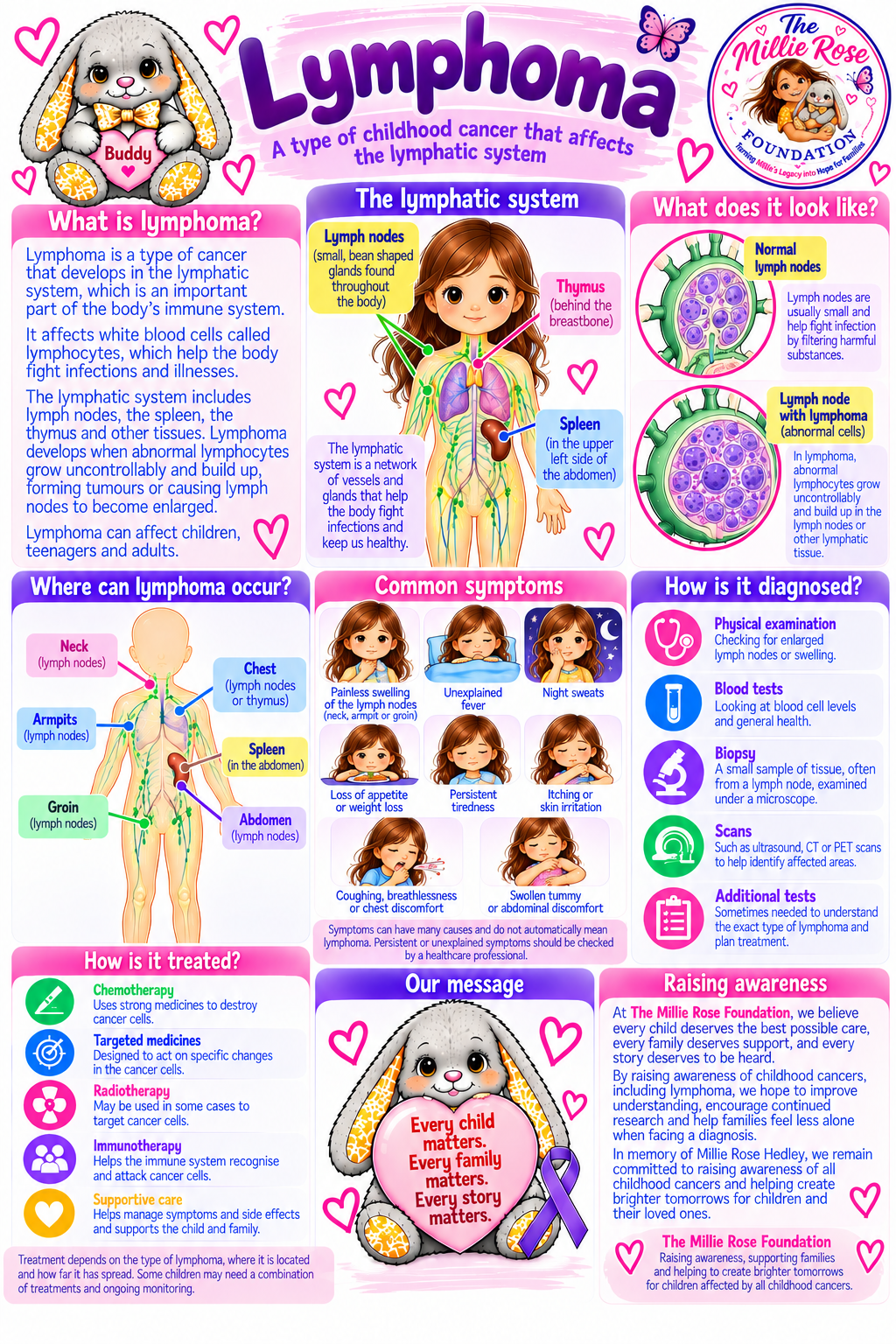
What is lymphoma? Lymphoma is a type of cancer that develops in the lymphatic system, which is an important part of the body's immune system. It affects white blood cells called lymphocytes, which help the body fight infections and illnesses. The lymphatic system includes lymph nodes, the spleen, the thymus and other tissues that help protect the body. Lymphoma develops when abnormal lymphocytes grow uncontrollably and build up, forming tumours or causing lymph nodes to become enlarged. Lymphoma can affect children, teenagers and adults. What are the symptoms? Symptoms can vary, but may include: Painless swelling of the lymph nodes, often in the neck, armpit or groin. Unexplained fever. Heavy night sweats. Unexplained weight loss. Persistent tiredness. Itching or skin irritation. Coughing, breathlessness or chest discomfort. A swollen tummy or abdominal discomfort. These symptoms can have many causes and do not automatically mean someone has lymphoma. However, persistent or unexplained symptoms should be checked by a healthcare professional. How is lymphoma diagnosed? Doctors may use several tests to investigate suspected lymphoma, including: Physical examination: Checking for enlarged lymph nodes or swelling. Blood tests: Looking at blood cell levels and general health. Biopsy: Taking a small sample of tissue, often from a lymph node, to examine under a microscope. Scans: Such as ultrasound, CT or PET scans to help identify affected areas. Additional tests: Sometimes needed to understand the exact type of lymphoma and plan treatment. How is lymphoma treated? Treatment depends on the type of lymphoma, where it is located, how far it has spread and the individual's circumstances. Treatment may include chemotherapy, targeted medicines, immunotherapy, radiotherapy or other specialist treatments. Some children and young people may need a combination of treatments and ongoing monitoring. Many children with lymphoma respond well to treatment, although outcomes vary depending on the individual diagnosis. Raising awareness 💗 At The Millie Rose Foundation, we believe every child deserves the best possible care, every family deserves support, and every story deserves to be heard. By raising awareness of childhood cancers, including lymphoma, we hope to improve understanding, encourage continued research and help families feel less alone when facing a diagnosis. In memory of Millie Rose Hedley, we remain committed to raising awareness of all childhood cancers and helping create brighter tomorrows for children and their loved ones. 💗 Every child matters. Every family matters. Every story matters. This information is for general awareness and educational purposes only. It is not a substitute for professional medical advice.
Hodgkin Lymphoma
What is Hodgkin lymphoma? Hodgkin lymphoma is a type of cancer that develops in the lymphatic system, which is part of the body's immune system. It affects white blood cells called lymphocytes, which help the body fight infections. It often begins in the lymph nodes, which are small glands found in areas such as the neck, armpits and groin. Hodgkin lymphoma can affect children and teenagers, as well as adults. What are the symptoms? Symptoms can vary, but may include: Painless swelling of the lymph nodes, often in the neck. Unexplained fever. Heavy night sweats. Unexplained weight loss. Persistent tiredness. Itching or skin irritation. Coughing, breathlessness or chest discomfort. Reduced appetite. Some children may have only one or two symptoms. These signs can also have other causes, but persistent or unexplained symptoms should be checked by a healthcare professional. How is Hodgkin lymphoma diagnosed? Doctors may carry out several tests to understand what is happening, including: Physical examination: Checking for swollen lymph nodes and other symptoms. Blood tests: Assessing blood cell levels and general health. Biopsy: Taking a sample of tissue, usually from a lymph node, to examine under a microscope. Scans: PET, CT or other imaging scans to see where the lymphoma is located. Additional tests: These may be needed to help plan the most suitable treatment. How is Hodgkin lymphoma treated? Treatment depends on the child's age, the stage of the lymphoma and their individual circumstances. Treatment may include: Chemotherapy: Medicines that destroy cancer cells. Radiotherapy: High-energy radiation used to target cancer cells in certain situations. Targeted medicines and immunotherapy: Treatments that help attack cancer cells in specific ways. Supportive care: Help managing side effects and supporting the child's physical and emotional wellbeing. Many children and young people with Hodgkin lymphoma respond well to treatment. The medical team will explain the available options and provide care tailored to each child. Raising awareness 💗 At The Millie Rose Foundation, we believe every child deserves the best possible care, every family deserves support, and every story deserves to be heard. A childhood cancer diagnosis affects the whole family. Parents, brothers, sisters and loved ones may face uncertainty, emotional challenges and a very different daily life. By raising awareness of childhood cancers, including Hodgkin lymphoma, we hope to improve understanding, encourage continued research and help families feel less alone. In memory of Millie Rose Hedley, we remain committed to raising awareness of all childhood cancers and supporting families through some of life's most difficult moments. 💗 Every child matters. Every family matters. Every story matters. This information is for general awareness and educational purposes only. It is not a substitute for advice from a qualified healthcare professional.
Non-Hodgkin Lymphoma
What is Non-Hodgkin lymphoma? Non-Hodgkin lymphoma (NHL) is a type of cancer that develops in the lymphatic system, which is part of the body's immune system. It affects white blood cells called lymphocytes, which help the body fight infections. Non-Hodgkin lymphoma can affect children, teenagers and adults. In children, it can sometimes grow quickly, so prompt diagnosis and treatment are important. It may develop in the lymph nodes, but it can also affect areas such as the chest, abdomen, bone marrow or other organs. What are the symptoms? Symptoms can vary depending on where the lymphoma develops. They may include: Painless swelling of the lymph nodes, often in the neck, armpit or groin. A swollen tummy or abdominal pain. Unexplained fever. Heavy night sweats. Unexplained weight loss. Persistent tiredness. Coughing or difficulty breathing. Loss of appetite. These symptoms can have many causes and do not automatically mean a child has lymphoma. However, persistent, unexplained or worsening symptoms should be checked by a healthcare professional. How is Non-Hodgkin lymphoma diagnosed? Doctors may carry out several tests to find out whether a child has lymphoma and understand which treatment may be needed. These may include: Physical examination: Checking for swollen lymph nodes or other signs. Blood tests: Assessing blood cell levels and general health. Biopsy: Taking a sample of tissue to examine under a microscope. Scans: CT, MRI or PET scans to identify affected areas. Additional tests: These may help determine the exact type of lymphoma and whether it has spread. Not every child will need every test. How is Non-Hodgkin lymphoma treated? Treatment depends on the specific type of lymphoma, where it is located, how quickly it is growing and the child's individual circumstances. Treatment may include: Chemotherapy: Medicines that destroy cancer cells. Immunotherapy: Treatments that help the immune system recognise and attack cancer cells. Targeted medicines: Treatments that act on specific features of cancer cells. Radiotherapy: High-energy radiation used in certain situations. Supportive care: Help managing side effects, preventing infections and supporting the child's wellbeing. Some types of childhood Non-Hodgkin lymphoma respond very well to treatment. Because different types behave differently, each child needs a treatment plan designed by a specialist team. Raising awareness 💗 At The Millie Rose Foundation, we believe every child deserves the best possible care, every family deserves support, and every story deserves to be heard. A childhood cancer diagnosis affects the whole family. Parents, brothers and sisters, grandparents and loved ones may all face uncertainty, fear and emotional challenges. By raising awareness of childhood cancers, including Non-Hodgkin lymphoma, we hope to improve understanding, encourage continued research and help families feel less alone. In memory of Millie Rose Hedley, we remain committed to raising awareness of all childhood cancers and supporting families through some of life's most difficult moments. 💗 Every child matters. Every family matters. Every story matters. This information is for general awareness and educational purposes only. It is not a substitute for advice from a qualified healthcare professional.
What is Germ Cell Tumours
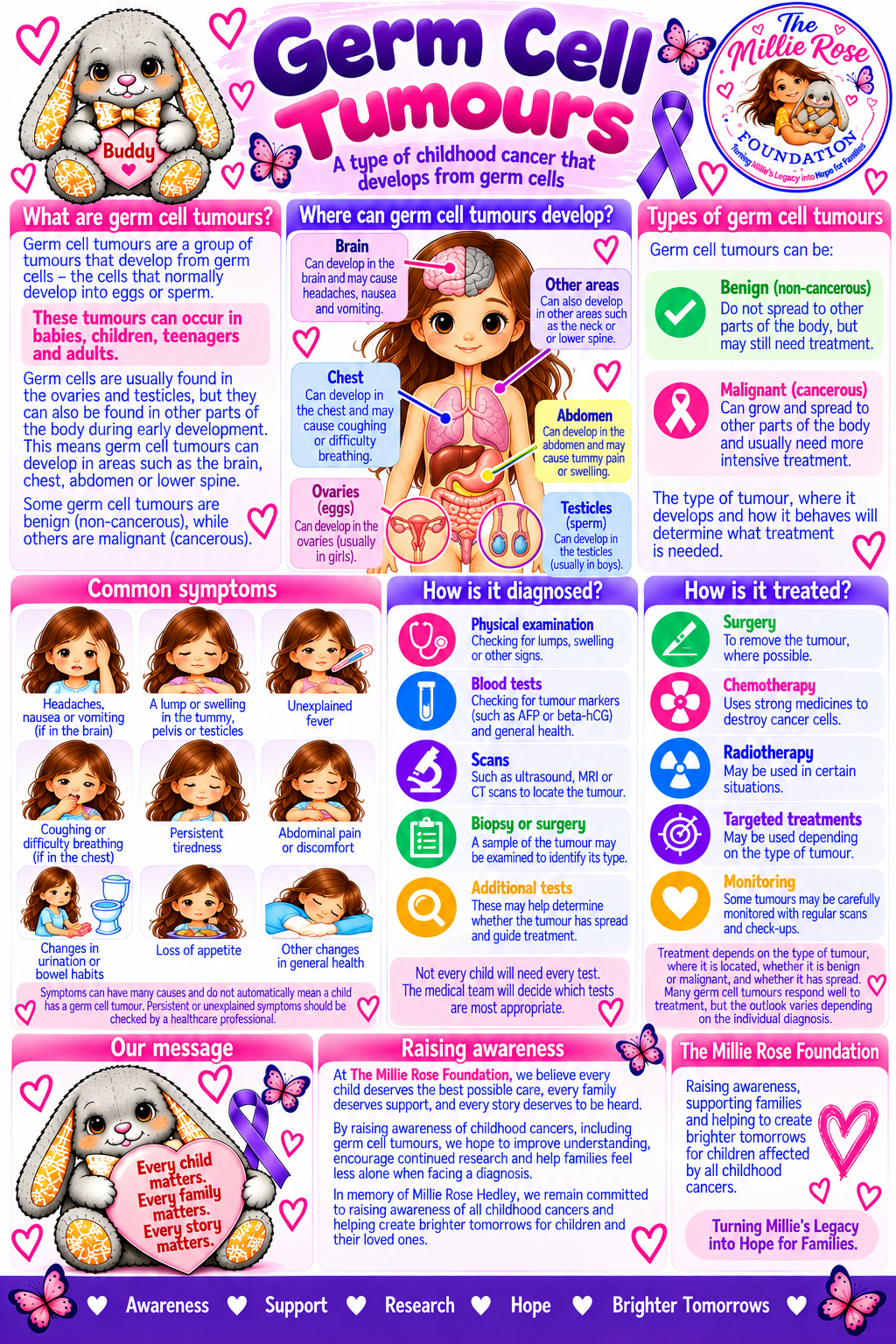
What are germ cell tumours? Germ cell tumours are a group of tumours that develop from germ cells — the cells that normally develop into eggs or sperm. These tumours can occur in babies, children, teenagers and adults. Although germ cells are usually found in the ovaries and testicles, they can sometimes be found in other parts of the body during early development. This means germ cell tumours can also develop in areas such as the brain, chest, abdomen or lower spine. Some germ cell tumours are benign (non-cancerous), while others are malignant (cancerous). The type of tumour determines how it behaves and what treatment may be needed. What are the symptoms? Symptoms depend on where the tumour develops and how large it becomes. They may include: A lump or swelling in the tummy, pelvis or testicles. Abdominal pain or discomfort. Persistent headaches, nausea or vomiting if the tumour develops in the brain. Coughing or difficulty breathing if it develops in the chest. Changes in urination or bowel habits. Unexplained tiredness or other changes in general health. These symptoms can have many causes and do not automatically mean a child has cancer. Persistent or unexplained symptoms should be checked by a healthcare professional. How are germ cell tumours diagnosed? Doctors may use several tests to understand the tumour, including: Scans: Ultrasound, MRI or CT scans to locate the tumour. Blood tests: Checking for tumour markers, such as AFP or beta-hCG, when appropriate. Biopsy or surgery: A sample of the tumour may be examined to identify its type. Additional tests: These may help determine whether the tumour has spread and guide treatment. Not every child will need every test. How are germ cell tumours treated? Treatment depends on the type of tumour, where it is located, whether it is benign or malignant, and whether it has spread. Treatment may include surgery, chemotherapy, radiotherapy in certain situations, or careful monitoring for some tumours. Many germ cell tumours respond well to treatment, but the outlook varies depending on the individual diagnosis. Raising awareness 💗 At The Millie Rose Foundation, we believe every child deserves the best possible care, every family deserves support, and every story deserves to be heard. By raising awareness of childhood cancers, including germ cell tumours, we hope to improve understanding, encourage continued research and help families feel less alone when facing a diagnosis. In memory of Millie Rose Hedley, we remain committed to raising awareness of all childhood cancers and helping create brighter tomorrows for children and their loved ones. 💗 Every child matters. Every family matters. Every story matters. This information is for general awareness and educational purposes only. It is not a substitute for advice from a qualified healthcare professional.
Benign
What are germ cell tumours? Germ cell tumours are a group of tumours that develop from germ cells — the cells that normally develop into eggs or sperm. These tumours can occur in babies, children, teenagers and adults. Although germ cells are usually found in the ovaries and testicles, they can sometimes be found in other parts of the body during early development. This means germ cell tumours can also develop in areas such as the brain, chest, abdomen or lower spine. Some germ cell tumours are benign (non-cancerous), while others are malignant (cancerous). The type of tumour determines how it behaves and what treatment may be needed. What are the symptoms? Symptoms depend on where the tumour develops and how large it becomes. They may include: A lump or swelling in the tummy, pelvis or testicles. Abdominal pain or discomfort. Persistent headaches, nausea or vomiting if the tumour develops in the brain. Coughing or difficulty breathing if it develops in the chest. Changes in urination or bowel habits. Unexplained tiredness or other changes in general health. These symptoms can have many causes and do not automatically mean a child has cancer. Persistent or unexplained symptoms should be checked by a healthcare professional. How are germ cell tumours diagnosed? Doctors may use several tests to understand the tumour, including: Scans: Ultrasound, MRI or CT scans to locate the tumour. Blood tests: Checking for tumour markers, such as AFP or beta-hCG, when appropriate. Biopsy or surgery: A sample of the tumour may be examined to identify its type. Additional tests: These may help determine whether the tumour has spread and guide treatment. Not every child will need every test. How are germ cell tumours treated? Treatment depends on the type of tumour, where it is located, whether it is benign or malignant, and whether it has spread. Treatment may include surgery, chemotherapy, radiotherapy in certain situations, or careful monitoring for some tumours. Many germ cell tumours respond well to treatment, but the outlook varies depending on the individual diagnosis. Raising awareness 💗 At The Millie Rose Foundation, we believe every child deserves the best possible care, every family deserves support, and every story deserves to be heard. By raising awareness of childhood cancers, including germ cell tumours, we hope to improve understanding, encourage continued research and help families feel less alone when facing a diagnosis. In memory of Millie Rose Hedley, we remain committed to raising awareness of all childhood cancers and helping create brighter tomorrows for children and their loved ones. 💗 Every child matters. Every family matters. Every story matters. This information is for general awareness and educational purposes only. It is not a substitute for advice from a qualified healthcare professional.
Malignant
What are malignant germ cell tumours? Germ cell tumours develop from germ cells — the cells that normally develop into eggs or sperm. These tumours can affect babies, children, teenagers and adults. A malignant germ cell tumour is cancerous, which means it can grow into nearby tissues and, in some cases, spread to other parts of the body. Although germ cells are usually found in the ovaries and testicles, they can sometimes be found in other parts of the body during early development. This means germ cell tumours can also develop in areas such as the brain, chest, abdomen or lower spine. What types are there? There are several types of malignant germ cell tumours, including: Yolk sac tumours: A type of cancer that can develop in the ovaries, testicles or other parts of the body. Germinomas and dysgerminomas: Tumours that can develop in the brain or reproductive organs. Embryonal carcinomas: A less common type of malignant germ cell tumour. Choriocarcinomas: Rare tumours that develop from cells associated with early pregnancy. Mixed germ cell tumours: Tumours containing more than one type of germ cell tumour. The exact type is important because it helps doctors decide which treatment is most suitable. What are the symptoms? Symptoms depend on where the tumour develops, its size and whether it has spread. They may include: A lump or swelling in the tummy, pelvis or testicle. Abdominal pain or discomfort. A feeling of fullness or pressure. Headaches, nausea or vomiting if the tumour develops in the brain. Coughing or difficulty breathing if it develops in the chest. Unexplained tiredness or changes in general health. These symptoms can have many causes and do not automatically mean a child has cancer. Persistent or unexplained symptoms should be checked by a healthcare professional. How are malignant germ cell tumours diagnosed? Doctors may use several tests to understand the tumour and plan treatment, including: Scans: Ultrasound, MRI or CT scans to identify the tumour's location and size. Blood tests: To check general health and look for tumour markers, such as AFP or beta-hCG, when appropriate. Biopsy or surgery: A tissue sample may be examined under a microscope to identify the type of tumour. Additional tests: These may help doctors determine whether the cancer has spread. Not every child will need every test. How are they treated? Treatment depends on the type of tumour, where it is located, whether it has spread and the child's individual circumstances. Treatment may include: Surgery: To remove the tumour where possible. Chemotherapy: Medicines that destroy cancer cells. Radiotherapy: High-energy radiation used in certain situations. Specialist treatments: Additional treatments may be considered depending on the tumour type and response to treatment. Many malignant germ cell tumours respond well to treatment, but outcomes vary depending on the specific diagnosis. A specialist childhood cancer team will develop an individual treatment plan. Raising awareness 💗 At The Millie Rose Foundation, we believe every child deserves the best possible care, every family deserves support, and every story deserves to be heard. A childhood cancer diagnosis can affect the whole family, bringing fear, uncertainty and many challenges. Raising awareness helps families understand these conditions and reminds them that they are not alone. In memory of Millie Rose Hedley, we remain committed to raising awareness of all childhood cancers, supporting families and helping create brighter tomorrows for children and their loved ones. 💗 Every child matters. Every family matters. Every story matters. This blog is for general awareness and educational purposes only. It is not a substitute for advice from a qualified healthcare professional.
"Team Millie not only raises essential funds but also shines a light on the often-overlooked realities of childhood cancer, offering a beacon of hope and support."
A supporter of Team Millie