

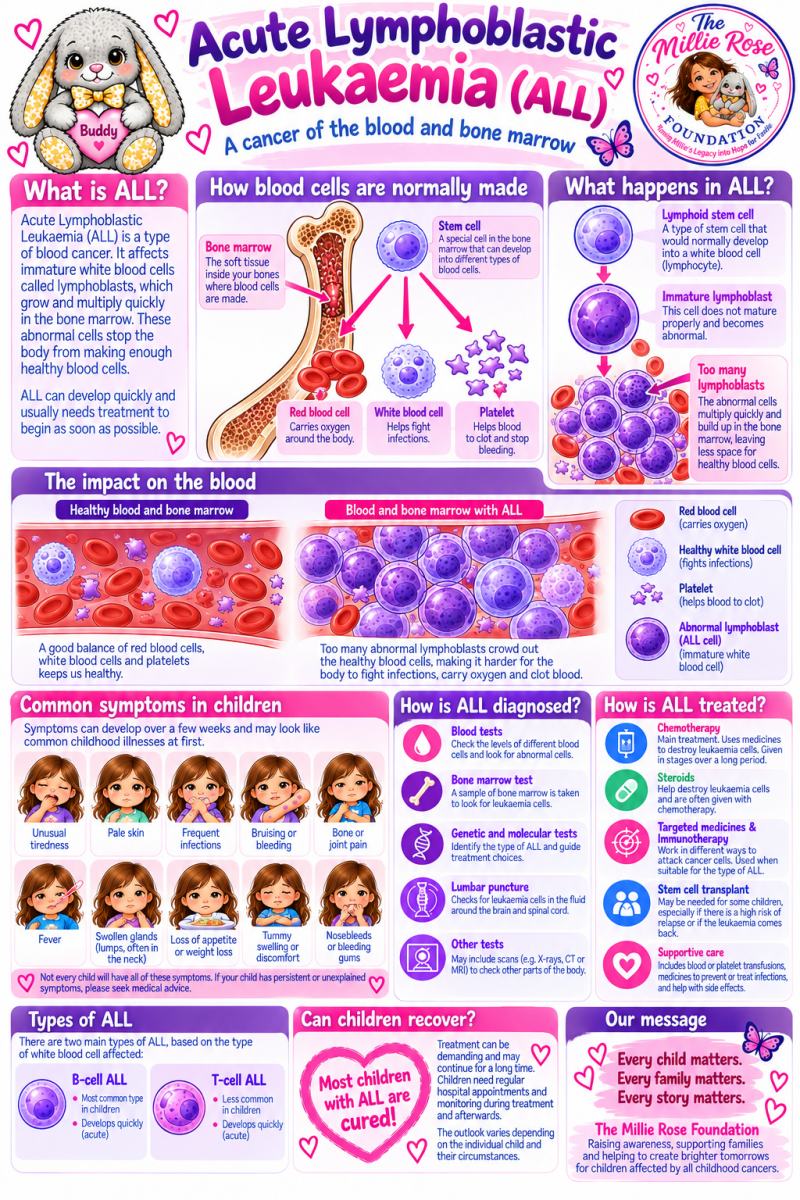
What is Acute Lymphoblastic Leukaemia?
Acute Lymphoblastic Leukaemia, often shortened to ALL, is a type of blood cancer that affects immature white blood cells.
To understand how it develops, it helps to know a little about how our blood works.
Inside our bones is a soft tissue called bone marrow. This is where our bodies make blood cells, including:
-
Red blood cells, which carry oxygen around the body.
-
White blood cells, which help fight infections.
-
Platelets, which help blood clot and stop bleeding.
In ALL, the body produces too many immature white blood cells called lymphoblasts. These abnormal cells multiply quickly and do not mature properly, so they cannot work like healthy white blood cells.
As they build up in the bone marrow, they leave less room for healthy blood cells to develop. This can lead to tiredness, infections, bruising and bleeding.
What does “acute lymphoblastic” mean?
The name may sound complicated, but each word has a meaning:
-
Acute means the cancer can develop quickly.
-
Lymphoblastic refers to immature cells that would normally develop into a type of white blood cell called a lymphocyte.
-
Leukaemia is a cancer that begins in blood-forming tissues, including the bone marrow.
There are different forms of ALL, including B-cell ALL and T-cell ALL. These names describe the type of lymphocyte involved.
Doctors carry out specialist tests to identify the particular type and its characteristics. This helps them decide which treatment is most suitable for the child.
Who can develop ALL?
ALL can affect children of different ages, but it is particularly common in younger children.
In the UK, around 400 children develop ALL each year. Although it is the most common type of childhood leukaemia, every child's experience can be different.
Doctors do not know exactly why most children develop ALL. It is linked to changes in the genetic instructions inside developing blood cells.
In most cases, there is no clear reason why a child develops the condition. It is not infectious, and parents should not blame themselves. Nothing they did or did not do caused their child's cancer.
What symptoms can ALL cause in children?
The symptoms of ALL can develop over a few weeks. At first, they may look like common childhood illnesses, which can make the condition difficult to recognise.
Possible symptoms include:
-
Unusual tiredness or weakness.
-
Looking paler than usual.
-
Frequent infections or taking longer to recover from illnesses.
-
A high temperature or fever.
-
Unexplained bruising.
-
Nosebleeds or bleeding gums.
-
Small red or purple spots on the skin.
-
Bone or joint pain.
-
Swollen glands, particularly in the neck, armpits or groin.
-
Loss of appetite or unexplained weight loss.
-
A swollen or uncomfortable tummy.
-
Breathlessness.
Not every child will have all these symptoms, and they can also be caused by other illnesses. However, persistent or unexplained symptoms should be checked by a healthcare professional. If a child is bruising or bleeding unusually, seek urgent medical advice.
How is ALL diagnosed?
If a doctor suspects leukaemia, tests will be carried out to find out what is happening.
Blood tests
Blood tests measure the different types of blood cells and can show whether there are unusual numbers or abnormal cells.
Bone marrow test
A sample of bone marrow is usually taken to confirm the diagnosis and examine the leukaemia cells.
Genetic and specialist tests
Further tests help identify the specific type of ALL and look for genetic changes that may affect treatment choices.
Lumbar puncture
A lumbar puncture may be carried out to check whether leukaemia cells are present in the fluid surrounding the brain and spinal cord.
Other tests or scans may be needed depending on the child's symptoms and circumstances. The medical team will explain which tests are necessary and what the results mean.
How is ALL treated?
Treatment for ALL usually begins quickly and is planned by a specialist childhood cancer team. The treatment plan depends on factors such as the type of ALL, the child's age, test results and how the leukaemia responds to treatment.
Chemotherapy
Chemotherapy is the main treatment for childhood ALL. It uses medicines to destroy leukaemia cells.
Treatment is usually given in several stages over an extended period. Some stages are more intensive than others, and the child will have regular tests to monitor their progress.
Steroids
Steroids are often used as part of treatment. They help destroy leukaemia cells and are commonly given alongside chemotherapy.
Targeted medicines and immunotherapy
Some children may be offered targeted medicines or immunotherapy. These treatments work in different ways to attack cancer cells and are used when appropriate for the child's type of ALL and circumstances.
Stem cell transplant
A stem cell or bone marrow transplant may be considered for some children, particularly when the leukaemia has a high risk of returning or has come back after treatment. It is not needed by every child.
Supportive care
Supportive care helps children cope with treatment and its side effects. This may include medicines to prevent or treat infections, blood or platelet transfusions, and support with pain, sickness and other symptoms.
Can children recover from ALL?
Treatment for childhood ALL has improved significantly, and most children with ALL are cured. However, the outlook varies according to the individual child's circumstances and the characteristics of their leukaemia.
Treatment can be demanding and may continue for a long time. Children need regular hospital appointments and monitoring during treatment and afterwards.
Even when treatment is successful, families may need time and support to adjust to life after cancer. Follow-up care helps the medical team monitor recovery and look for any longer-term effects.
How does ALL affect families?
A childhood cancer diagnosis affects the whole family, not just the child receiving treatment.
Parents and carers may face hospital stays, difficult decisions, uncertainty and changes to everyday life. They may need to understand unfamiliar medical information while trying to keep life as normal as possible for their child.
Brothers and sisters can have their own worries and questions. They may need reassurance, honest explanations suited to their age and time with people who can listen to them.
Every family responds differently. There is no right or wrong way to feel, and no family should feel they have to face everything alone.
Why are awareness and research important?
Research helps doctors understand ALL, improve treatments and find ways to reduce side effects.
It also helps specialists tailor treatment to the individual child, because not every type of ALL behaves in the same way.
Raising awareness helps people understand that childhood cancer is not one single disease. Every diagnosis brings its own challenges, and every child deserves the best possible care, compassion and support.
How The Millie Rose Foundation can help
The Millie Rose Foundation was created in memory of Millie Rose Hedley, with the aim of turning her legacy into hope for families.
We want to raise awareness of all childhood cancers, support families affected by a diagnosis and help create a community where people feel less alone.
By sharing information about conditions such as ALL, we hope to help people understand what families may experience and why continued research and support matter.
We believe every family deserves kindness, inclusion and understanding. No family should feel they have to navigate the challenges of childhood cancer without support.
A final message
Acute Lymphoblastic Leukaemia is a serious diagnosis, but children are so much more than their illness.
They are children with their own personalities, hopes, dreams and people who love them. Their families deserve compassion, clear information and support throughout the journey.
At The Millie Rose Foundation, we will continue to raise awareness of childhood cancers and stand alongside families affected by them.
Every child matters. Every family matters. Every story matters.
The Millie Rose Foundation — turning Millie’s legacy into hope for families.
This blog is for awareness and general information only. It is not a substitute for medical advice, diagnosis or treatment. Please speak to your child's medical team for advice about an individual diagnosis.
Add comment
Comments