

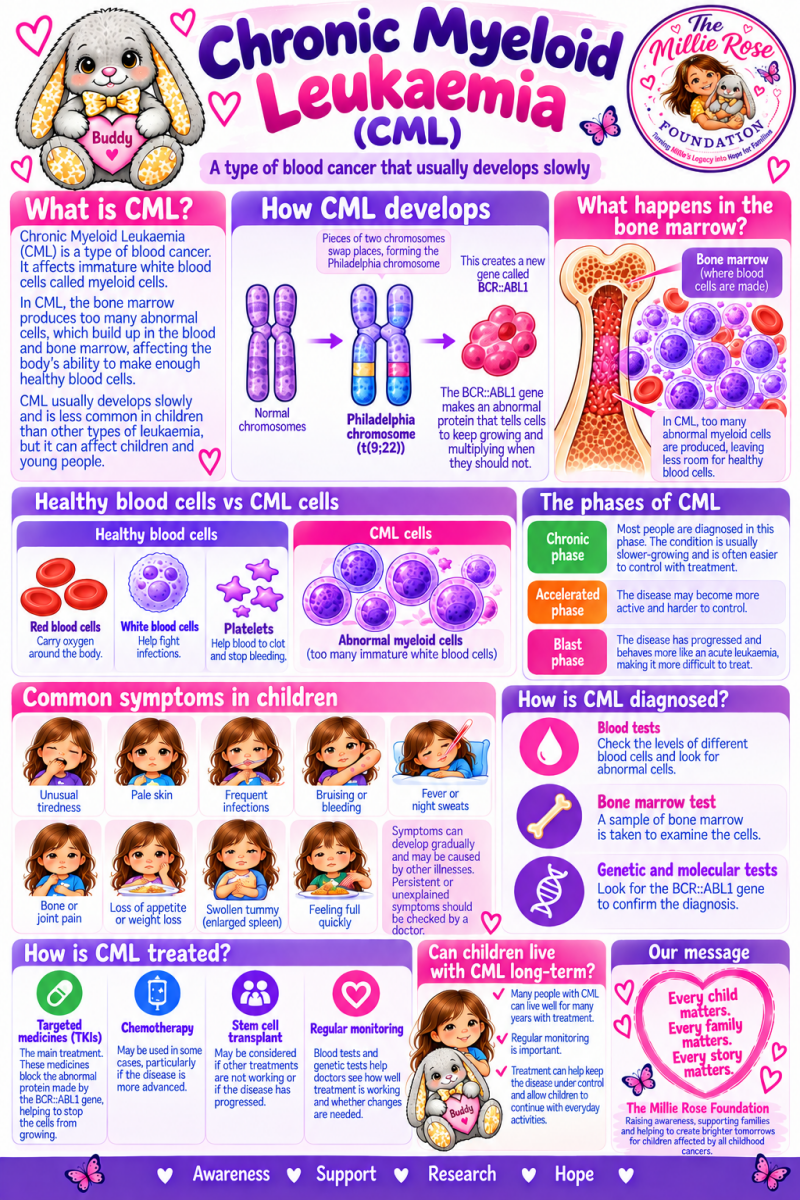
What is Chronic Myeloid Leukaemia?
Chronic Myeloid Leukaemia, often shortened to CML, is a type of cancer that affects the blood and bone marrow.
Bone marrow is the soft tissue inside our bones where blood cells are made. These include:
-
Red blood cells, which carry oxygen around the body.
-
White blood cells, which help fight infections.
-
Platelets, which help blood clot and stop bleeding.
In CML, the bone marrow produces too many abnormal cells from a family of developing white blood cells called myeloid cells. These cells can build up in the blood and bone marrow, affecting the body's ability to make and use healthy blood cells properly.
Although CML often develops slowly, it is still a serious condition that needs specialist care and monitoring.
What does “chronic myeloid” mean?
The name can sound complicated, but each word has a meaning:
-
Chronic means the condition usually develops slowly.
-
Myeloid refers to the family of blood cells affected.
-
Leukaemia is a cancer that begins in blood-forming tissues, including the bone marrow.
CML is different from acute leukaemias, such as Acute Myeloid Leukaemia (AML) and Acute Lymphoblastic Leukaemia (ALL), which generally develop more quickly and usually need immediate treatment.
CML is uncommon in children and is diagnosed much more often in adults. However, it can affect children and young people too.
What causes CML?
In most cases of CML, a change occurs in the genetic material of a developing blood cell. This change creates an abnormal gene called BCR::ABL1.
You may also hear about the Philadelphia chromosome. This is the name given to a chromosome change associated with the formation of the BCR::ABL1 gene.
The abnormal gene produces a protein that sends signals telling cells to keep growing and multiplying when they should not. This leads to an overproduction of abnormal myeloid cells.
Most people with CML have no known reason why this change happened. It is not caused by anything a parent did or did not do, and families should not blame themselves.
What symptoms can CML cause?
Some people have no obvious symptoms when CML is first discovered. It may be picked up during a routine blood test.
When symptoms do occur, they can develop gradually and may include:
-
Unusual tiredness or weakness.
-
Pale skin.
-
Frequent infections.
-
Unexplained bruising or bleeding.
-
Fever or night sweats.
-
Bone or joint pain.
-
Loss of appetite or unexplained weight loss.
-
A swollen or uncomfortable tummy.
-
Feeling full after eating only a small amount.
A swollen tummy can happen when the spleen, an organ that helps filter the blood, becomes enlarged.
These symptoms can have many causes and do not automatically mean someone has leukaemia. However, persistent or unexplained symptoms should be checked by a healthcare professional.
How is CML diagnosed?
If a doctor suspects CML, several tests may be carried out to confirm the diagnosis and understand the condition.
Blood tests
Blood tests measure the different types of blood cells. They may show an unusually high number of white blood cells or other changes that need further investigation.
Bone marrow tests
A sample of bone marrow may be taken to examine the cells and help specialists understand the condition.
Genetic and molecular tests
Specialist tests look for the BCR::ABL1 gene. Finding this genetic change helps confirm CML and allows doctors to monitor how well treatment is working.
The medical team may carry out other tests to assess the person's health and determine the best treatment approach.
What are the phases of CML?
CML is often described in phases, based on how the disease is behaving and the number and type of abnormal cells present.
-
Chronic phase: This is the phase in which most people are diagnosed. The condition is often slower-growing and is usually easier to control with treatment.
-
Accelerated phase: The disease may become more active and harder to control.
-
Blast phase: The disease has progressed and behaves more like an acute leukaemia, making it more difficult to treat.
Doctors use blood tests, genetic tests and other findings to understand the phase and guide treatment. The terminology used to describe phases can vary between medical classification systems.
How is CML treated?
Treatment depends on the phase of CML, the person's age, overall health and how the disease responds to treatment.
Targeted medicines
The main treatment for CML is usually a group of medicines called tyrosine kinase inhibitors, or TKIs.
These medicines target the abnormal protein produced by the BCR::ABL1 gene. By blocking its signals, they help slow or stop the growth of the abnormal cells.
Many people take these medicines as tablets. Treatment can often keep CML under control for many years, although regular monitoring remains important.
Chemotherapy
Some people may need chemotherapy, depending on their circumstances and how the disease is behaving. It may be used to reduce the number of abnormal cells or as part of treatment for more advanced disease.
Stem cell transplant
A stem cell or bone marrow transplant may be considered in certain situations, such as when other treatments are not working well enough or the disease has progressed. It is not needed by everyone.
Regular monitoring
Blood tests and specialist checks help doctors see how well treatment is working. Molecular tests can measure levels of BCR::ABL1 and help the medical team decide whether treatment needs to change.
Treatment decisions are individual, and a specialist team will explain the options, benefits and possible side effects.
Can people live with CML long-term?
Treatments for CML have improved significantly. For many people, targeted medicines can keep the disease under control for a long time and allow them to continue with everyday activities.
However, treatment and monitoring are important, and everyone's experience is different. Some people may need to change medicines if the first treatment does not work well enough or causes difficult side effects.
For children and young people, care also needs to consider growth, development, education, emotional wellbeing and the impact of long-term treatment.
A diagnosis can bring uncertainty, but families should be given clear information and support to understand what it means for their individual circumstances.
How does CML affect families?
A childhood cancer diagnosis can change life for the whole family. There may be hospital appointments, blood tests, worries about treatment and uncertainty about the future.
Parents and carers may find themselves trying to understand unfamiliar medical terms while supporting their child through difficult experiences.
Siblings can have questions and worries of their own. They may need reassurance, honest explanations suited to their age and time with people who can listen to them.
Every family responds differently. There is no right or wrong way to feel, and no family should feel they have to face these challenges alone.
Why are awareness and research important?
Research continues to help doctors understand CML, improve treatments and find ways to reduce side effects.
Although CML is rare in children, it is important that children and young people have access to specialist care and treatments suited to their needs.
Raising awareness of different types of childhood cancer helps people understand that leukaemia is not just one disease. Each type has its own characteristics, challenges and treatment approaches.
Behind every diagnosis is a person with their own interests, hopes, dreams and people who love them. They are always more than the name of their illness.
How The Millie Rose Foundation can help
The Millie Rose Foundation was created in memory of Millie Rose Hedley, with the aim of turning her legacy into hope for families.
We want to raise awareness of all childhood cancers, support families affected by a diagnosis and help create a community where people feel less alone.
By sharing information about conditions such as CML, we hope to help more people understand childhood cancer and the challenges families may face.
We believe that compassion, inclusion and understanding matter. Families deserve to feel listened to, supported and treated with kindness throughout their journey.
A final message
Chronic Myeloid Leukaemia may be rare in children, but every child and family affected deserves understanding, care and support.
A diagnosis is only one part of a child's story. Children deserve opportunities to learn, play, make memories and enjoy the things that matter to them, alongside receiving the care they need.
At The Millie Rose Foundation, we will continue to raise awareness of childhood cancers and stand alongside families affected by them.
Every child matters. Every family matters. Every story matters.
The Millie Rose Foundation — turning Millie’s legacy into hope for families.
This blog is for awareness and general information only. It is not a substitute for medical advice, diagnosis or treatment. Please speak to your child's medical team for advice about an individual diagnosis.
Add comment
Comments