

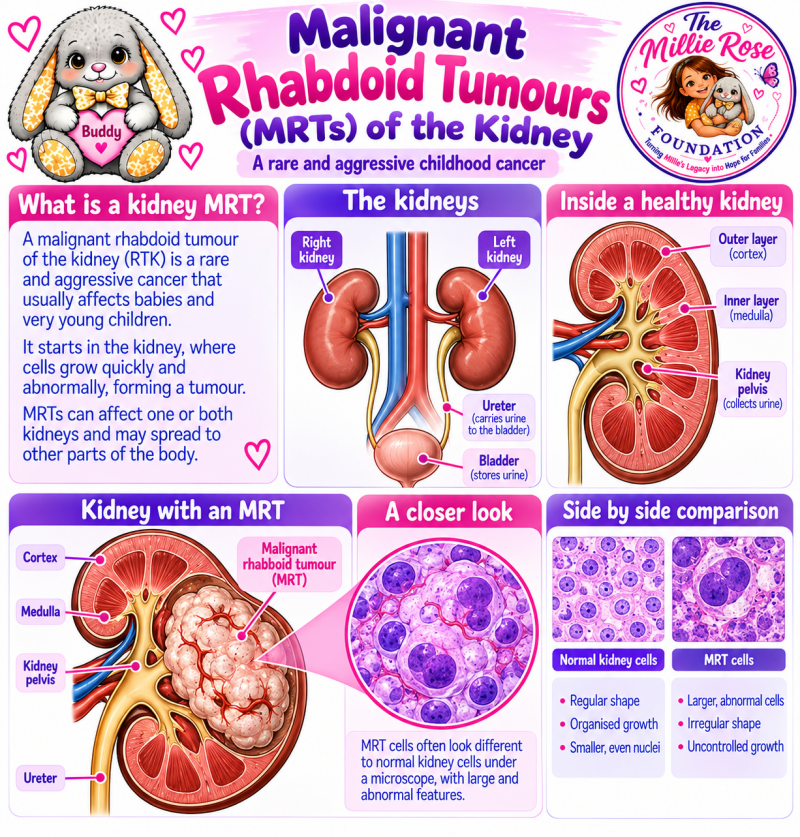
Malignant Rhabdoid Tumours (MRTs)
Malignant rhabdoid tumours are rare, aggressive cancers that most often affect babies and very young children. They can develop in different parts of the body, including the kidneys and soft tissues. When they develop in the brain or central nervous system, they are often called atypical teratoid/rhabdoid tumours (ATRTs).
These tumours are associated with changes in a gene called SMARCB1, or less commonly SMARCA4, which normally helps control how cells grow. Symptoms depend on where the tumour develops and may include a lump or swelling, pain, tiredness, vomiting, headaches or changes in movement or behaviour.
Diagnosis usually involves scans and a biopsy, where a small sample of the tumour is examined. Treatment may include surgery, chemotherapy and, in some cases, radiotherapy. The best approach depends on the child's age, the tumour's location and whether it has spread.
Malignant rhabdoid tumours can be very difficult to treat, and outcomes vary. Researchers continue to investigate new treatments to improve survival and give children and families more hope.
At The Millie Rose Foundation, we believe every family affected by childhood cancer deserves compassion, understanding and support. By raising awareness and sharing information, we hope to help more people understand these rare childhood cancers and the challenges families face.
Every child matters. Every family matters. Every story matters.
This information is for awareness and educational purposes only and is not a substitute for advice from a child's specialist medical team.
Add comment
Comments