

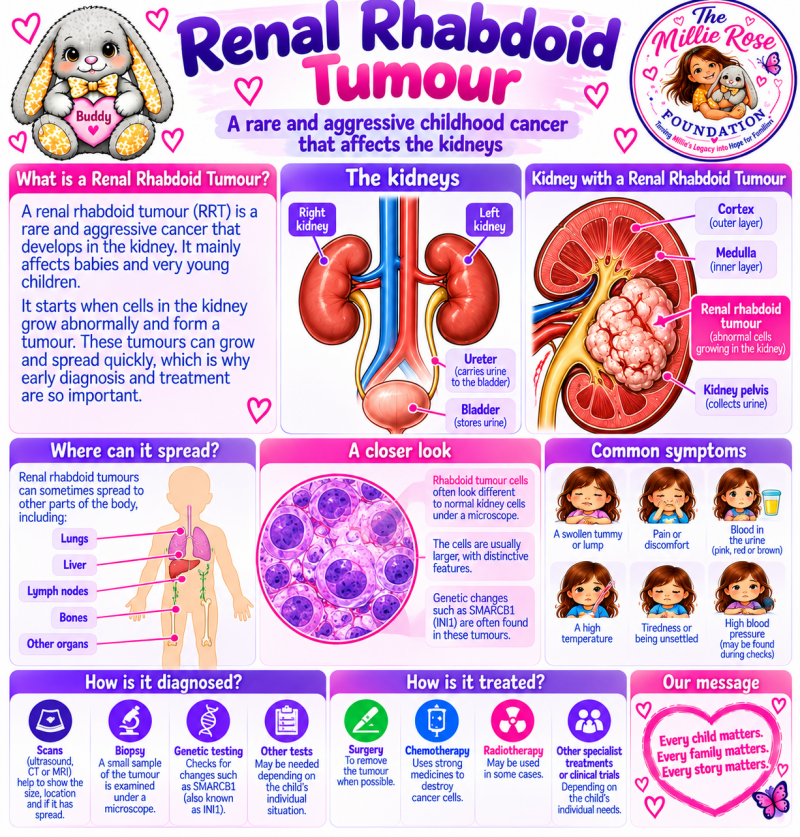
What is a Renal Rhabdoid Tumour?
The word renal means relating to the kidneys. Our kidneys are two bean-shaped organs that help filter waste and extra water from the blood, producing urine.
A renal rhabdoid tumour develops when abnormal cells grow in the kidney and form a tumour. These tumours can grow and spread quickly, which is why early specialist assessment and treatment are so important. They are rare, and each child's experience can be different.
What causes it?
Most renal rhabdoid tumours are associated with a change in a gene called SMARCB1, also known as INI1. More rarely, changes in a related gene called SMARCA4 can be involved.
These genes help cells control how they grow and function. When the gene does not work as it should, cells can begin growing abnormally and form a tumour.
In many children, the reason the genetic change happened is not known. Sometimes, a gene change can be inherited, so the specialist team may offer genetic counselling and testing to help a family understand what the findings mean. A diagnosis is not the result of anything a parent did or did not do.
What symptoms can children experience?
Symptoms can vary from child to child. Some possible signs include:
-
A swollen tummy or a lump in the abdomen.
-
Pain or discomfort.
-
Blood in the urine, which may look pink, red or dark brown.
-
A high temperature or repeated fevers.
-
Changes in behaviour, such as being unusually unsettled or clingy.
-
High blood pressure, which may be found during a medical examination.
These symptoms can have many causes and do not automatically mean a child has cancer. However, any persistent or worrying symptoms should be discussed with a healthcare professional. If a child is seriously unwell, seek urgent medical help.
How is it diagnosed?
A renal rhabdoid tumour can look similar to other kidney tumours on scans. Doctors therefore need to examine the tumour cells to identify the exact type of cancer.
Tests may include:
Ultrasound, CT or MRI scans – these help doctors see the tumour, understand its size and location, and check whether the cancer may have spread.
A biopsy or surgery – a sample of tumour tissue is examined under a microscope by specialist laboratory staff.
Genetic and molecular tests – these can look for characteristic changes, including those involving the SMARCB1 gene, to help confirm the diagnosis.
The specialist team may also arrange further tests to assess the child's overall health and check for spread to other parts of the body.
How is it treated?
Treatment is planned by a specialist childhood cancer team. There is no single standard treatment that is right for every child, so the team considers the child's age, the tumour's location, whether it has spread and the child's individual circumstances.
Treatment may include:
-
Surgery to remove the tumour when possible.
-
Chemotherapy, using medicines to destroy cancer cells.
-
Radiotherapy in selected cases.
-
Other specialist treatments or clinical trials, depending on the child's situation and available options.
Treatment can be intensive, and the team will also help manage side effects, pain and other symptoms. Families should discuss the possible benefits, risks and choices with their child's specialist team.
What is the outlook?
Renal rhabdoid tumours are particularly challenging to treat because they can grow and spread quickly. The outlook varies according to several factors, including the child's age, whether the cancer has spread and how the tumour responds to treatment.
Because this cancer is so rare, research and clinical trials are important in helping specialists learn more and explore better treatments. Every child's situation is unique, and a child's medical team is best placed to explain what a diagnosis means for that individual child.
Supporting families affected by childhood cancer
A childhood cancer diagnosis can turn a family's world upside down. Hospital appointments, treatment, uncertainty and worry can affect parents, siblings and the wider family.
Families deserve clear information, compassionate care and support throughout their journey. They should never feel that they have to face everything alone.
At The Millie Rose Foundation, we are committed to raising awareness of childhood cancers, sharing families' stories and helping create a community where children and families affected by cancer are seen, heard and supported.
By talking about rare cancers such as renal rhabdoid tumours, we can help more people understand the realities of childhood cancer and the importance of continued research.
Every child matters. Every family matters. Every story matters.
This blog is for awareness and educational purposes only. It does not replace medical advice from a child's specialist team.
Add comment
Comments