

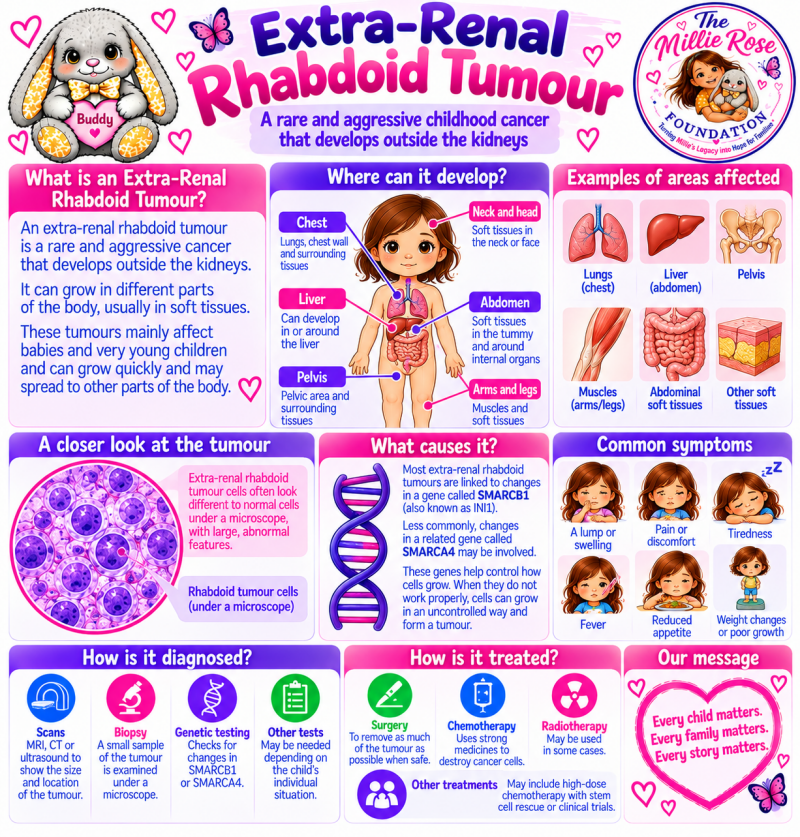
What is an Extra-Renal Rhabdoid Tumour?
The word extra-renal means outside the kidney. A rhabdoid tumour is a cancer that can develop in different parts of the body.
When a malignant rhabdoid tumour develops outside the kidney and outside the brain or spinal cord, it is often described as an extra-renal, extra-cranial malignant rhabdoid tumour.
It can develop in soft tissues, such as the muscles and tissues around the body's organs. These tumours can grow quickly and may spread to other parts of the body. Because they are so rare, children need specialist care from a team experienced in childhood cancer.
What causes these tumours?
Many rhabdoid tumours are linked to a change in a gene called SMARCB1, also known as INI1. Less commonly, changes in a related gene called SMARCA4 may be involved.
These genes help control how cells grow and function. When they do not work properly, cells can grow abnormally and form a tumour.
In many cases, the genetic change occurs in the tumour itself. In some children, however, a change may also be present in the body's other cells from birth. This can increase the risk of developing rhabdoid tumours and sometimes other related cancers.
Specialists may recommend genetic testing and counselling to help families understand the results and whether further monitoring is needed. A genetic change is not caused by something a parent did or did not do.
What symptoms might a child experience?
Symptoms depend on where the tumour develops and which parts of the body it affects.
Possible symptoms include:
-
A lump or swelling.
-
Pain or discomfort around the affected area.
-
Unusual tiredness or changes in a child's usual behaviour.
-
Fever.
-
Reduced appetite or unexplained weight changes.
-
Other symptoms related to the tumour's location.
These symptoms can have many causes and do not automatically mean a child has cancer. However, any persistent, unexplained or worrying symptoms should be assessed by a healthcare professional.
How is an Extra-Renal Rhabdoid Tumour diagnosed?
Doctors use several tests to understand what is happening and confirm the type of tumour.
Scans: Ultrasound, MRI or CT scans can help doctors see where the tumour is, how large it is and whether it may have spread.
Biopsy: A small sample of the tumour is examined under a microscope by specialist laboratory staff.
Genetic and laboratory tests: These can help identify changes involving SMARCB1 or SMARCA4 and distinguish a rhabdoid tumour from other types of cancer.
Further investigations: The team may arrange additional scans or tests to check whether the cancer has spread to other parts of the body.
How are Extra-Renal Rhabdoid Tumours treated?
Treatment is planned individually by a specialist childhood cancer team. Because these tumours are rare and can be aggressive, treatment may involve several approaches.
These can include:
-
Surgery to remove as much of the tumour as possible when safe.
-
Chemotherapy to destroy cancer cells.
-
Radiotherapy to target cancer cells in selected cases.
-
High-dose chemotherapy with stem cell rescue in some treatment plans.
-
Clinical trials that investigate new treatments.
Not every child will receive the same treatment. The team will consider the child's age, general health, tumour location, whether the cancer has spread and how it responds to treatment.
What is the outlook?
Extra-renal rhabdoid tumours are serious cancers that can be difficult to treat. The outlook varies depending on factors such as the child's age, where the tumour developed, whether it has spread and how it responds to treatment.
Because these tumours are so rare, it can be difficult to predict an individual child's outcome using statistics alone. A specialist team is best placed to explain the situation and discuss treatment options with each family.
Researchers continue to study rhabdoid tumours to better understand how they develop and to find more effective treatments. Research and clinical trials are important parts of improving care for children affected by these rare cancers.
Supporting families affected by childhood cancer
A childhood cancer diagnosis can change a family's world in an instant. Hospital visits, treatment, uncertainty and worry can affect parents, carers, brothers, sisters and the wider family.
Families deserve compassion, clear information and support throughout their journey. They should never feel that they have to face everything alone.
At The Millie Rose Foundation, we are committed to raising awareness of childhood cancers, sharing families' stories and helping children and families feel seen, heard and supported.
By talking about rare cancers such as extra-renal rhabdoid tumours, we can help more people understand the challenges families face and why continued research matters.
Every child matters. Every family matters. Every story matters.
This blog is for awareness and educational purposes only. It does not replace medical advice from a child's specialist healthcare team.
Add comment
Comments