

What is neuroblastoma?
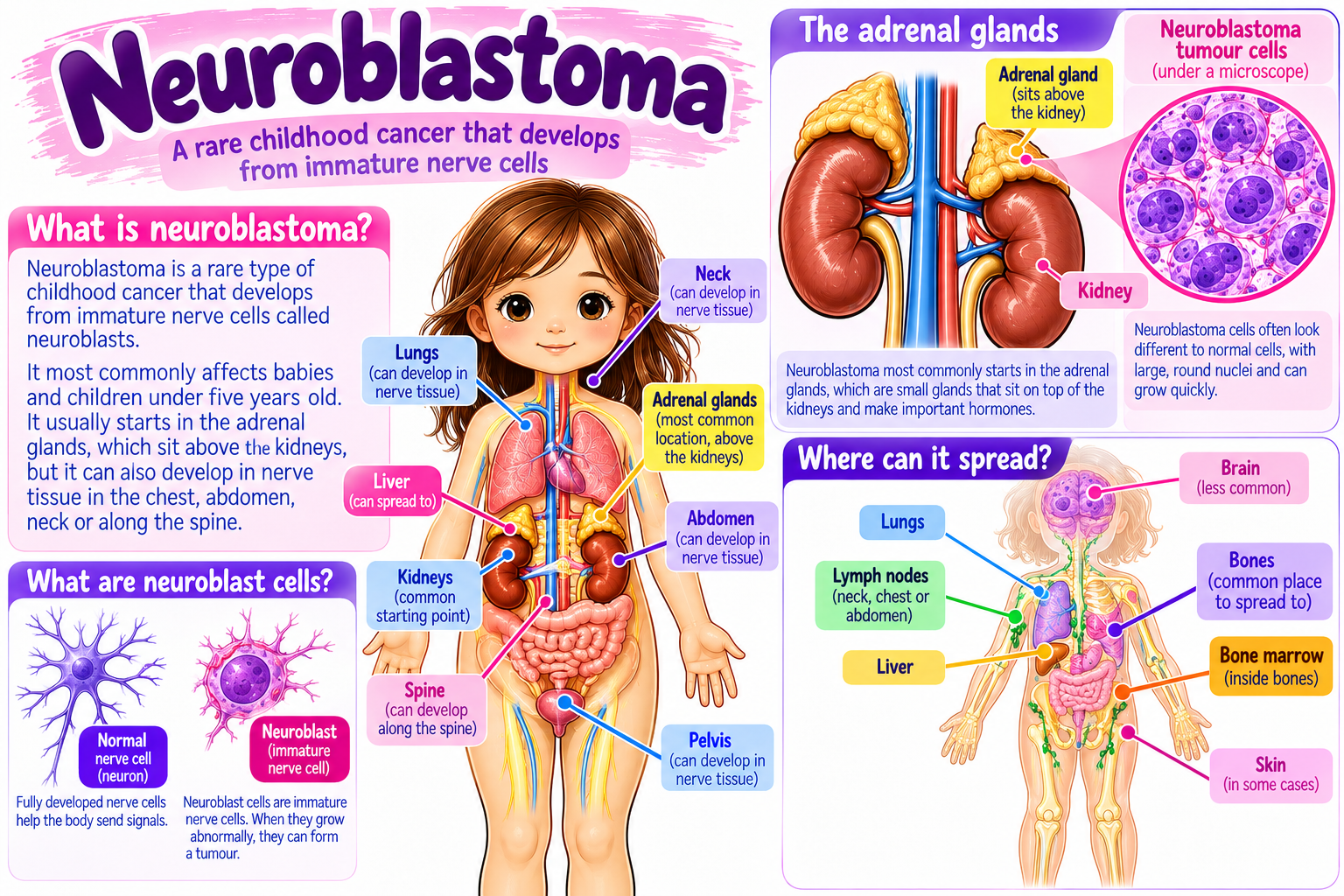
Neuroblastoma is a rare type of childhood cancer that develops from immature nerve cells called neuroblasts. These cells are part of the body's developing nervous system, which helps control functions such as movement, breathing, heart rate and digestion.
Neuroblastoma most commonly affects babies and children under the age of five, although it can occasionally occur in older children. It is one of the most common solid cancers found outside the brain in young children.
Neuroblastoma usually begins in the adrenal glands, which sit just above the kidneys. However, it can also develop in nerve tissue along the spine, in the chest, abdomen, pelvis or neck.
What causes neuroblastoma?
In most cases, the exact cause of neuroblastoma is unknown. It develops when immature nerve cells grow abnormally instead of developing into healthy, functioning cells.
These abnormal cells can multiply and form a tumour. Sometimes, cancer cells can spread to other parts of the body, including the bones, bone marrow, liver, skin and lymph nodes.
Most children diagnosed with neuroblastoma have no known family history of the disease. In a small number of cases, genetic changes inherited from a parent may increase the risk.
What are the symptoms of neuroblastoma?
The symptoms can vary depending on where the tumour develops and whether the cancer has spread.
Common symptoms may include:
-
A lump or swelling in the abdomen, chest or neck.
-
Persistent pain in the bones, back or legs.
-
A swollen tummy or discomfort in the abdomen.
-
Loss of appetite or unexplained weight loss.
-
Tiredness, weakness or irritability.
-
Unexplained bruising, particularly around the eyes.
-
Changes in bowel or bladder habits.
-
Difficulty breathing if a tumour presses against the chest.
-
Weakness, difficulty walking or changes in movement.
-
Fever or other symptoms that do not have an obvious explanation.
Some children may have very few symptoms in the early stages. These signs can also occur with other childhood illnesses, but persistent or unexplained symptoms should always be discussed with a healthcare professional.
How is neuroblastoma diagnosed?
If neuroblastoma is suspected, a specialist medical team will carry out investigations to understand what is happening and determine the most appropriate treatment.
These investigations may include:
-
Physical examination: Checking for lumps, swelling and other signs of illness.
-
Blood and urine tests: Looking for changes that may help identify neuroblastoma, including certain substances produced by tumour cells.
-
Imaging scans: Ultrasound, MRI, CT or specialised nuclear medicine scans can help locate the tumour and check whether it has spread.
-
Biopsy: A small sample of the tumour may be taken and examined under a microscope.
-
Bone marrow tests: These may be needed to check whether cancer cells have reached the bone marrow.
-
Genetic and molecular testing: Examining the tumour for changes that can help doctors understand its behaviour and guide treatment decisions.
Not every child will need every test. The investigations depend on the individual child's circumstances.
How is neuroblastoma treated?
Treatment depends on several factors, including the child's age, the location of the tumour, whether it has spread, and the biological features of the cancer.
Treatment may include:
-
Surgery: To remove as much of the tumour as safely possible.
-
Chemotherapy: Medicines that destroy cancer cells or stop them from growing.
-
Radiotherapy: High-energy radiation used to target cancer cells in certain circumstances.
-
Stem cell transplant: In some cases, a child's own stem cells may be collected and returned after intensive chemotherapy to help the bone marrow recover.
-
Immunotherapy: Treatments that help the immune system recognise and attack cancer cells.
-
Targeted treatments: Medicines designed to act on specific changes within cancer cells, where appropriate.
-
Supportive care: Help with pain, nutrition, side effects and the emotional needs of the child and family.
Some children may need only limited treatment, while others require a combination of treatments over a longer period. Neuroblastoma can behave differently from one child to another, so treatment plans are carefully tailored by specialist teams.
What is the outlook for children with neuroblastoma?
The outlook varies considerably. Some neuroblastomas grow slowly and may even shrink or disappear without intensive treatment, while others can be aggressive and more difficult to treat.
Doctors consider the child's age, the extent of the cancer, the tumour's genetic features and how it responds to treatment when discussing the likely outlook.
Research is continually helping specialists understand neuroblastoma better and develop new treatments. However, some children still face difficult treatment journeys, and continued research remains essential.
How does neuroblastoma affect families?
A childhood cancer diagnosis can turn a family's world upside down. Hospital appointments, investigations, treatment and uncertainty can affect every part of family life.
Parents and carers may experience fear, exhaustion and emotional distress, while brothers and sisters can struggle to understand the changes happening around them.
Families need more than medical treatment. They also need compassion, practical assistance, emotional support and people who understand the challenges they are facing.
Raising awareness through The Millie Rose Foundation
At The Millie Rose Foundation, we believe every child deserves the best possible care, every family deserves support, and every childhood cancer story deserves to be heard.
By raising awareness of cancers such as neuroblastoma, we hope to improve understanding, encourage conversations about childhood cancer and shine a light on the families navigating these incredibly difficult experiences.
We remember Millie Rose Hedley and all the children whose lives have been affected by childhood cancer. Through our work, we want to help families feel less alone and create brighter tomorrows for children affected by all childhood cancers.
💗 Every child matters. Every family matters. Every story matters.
This information is for awareness and educational purposes only and is not a substitute for advice from a qualified healthcare professional.
Add comment
Comments