

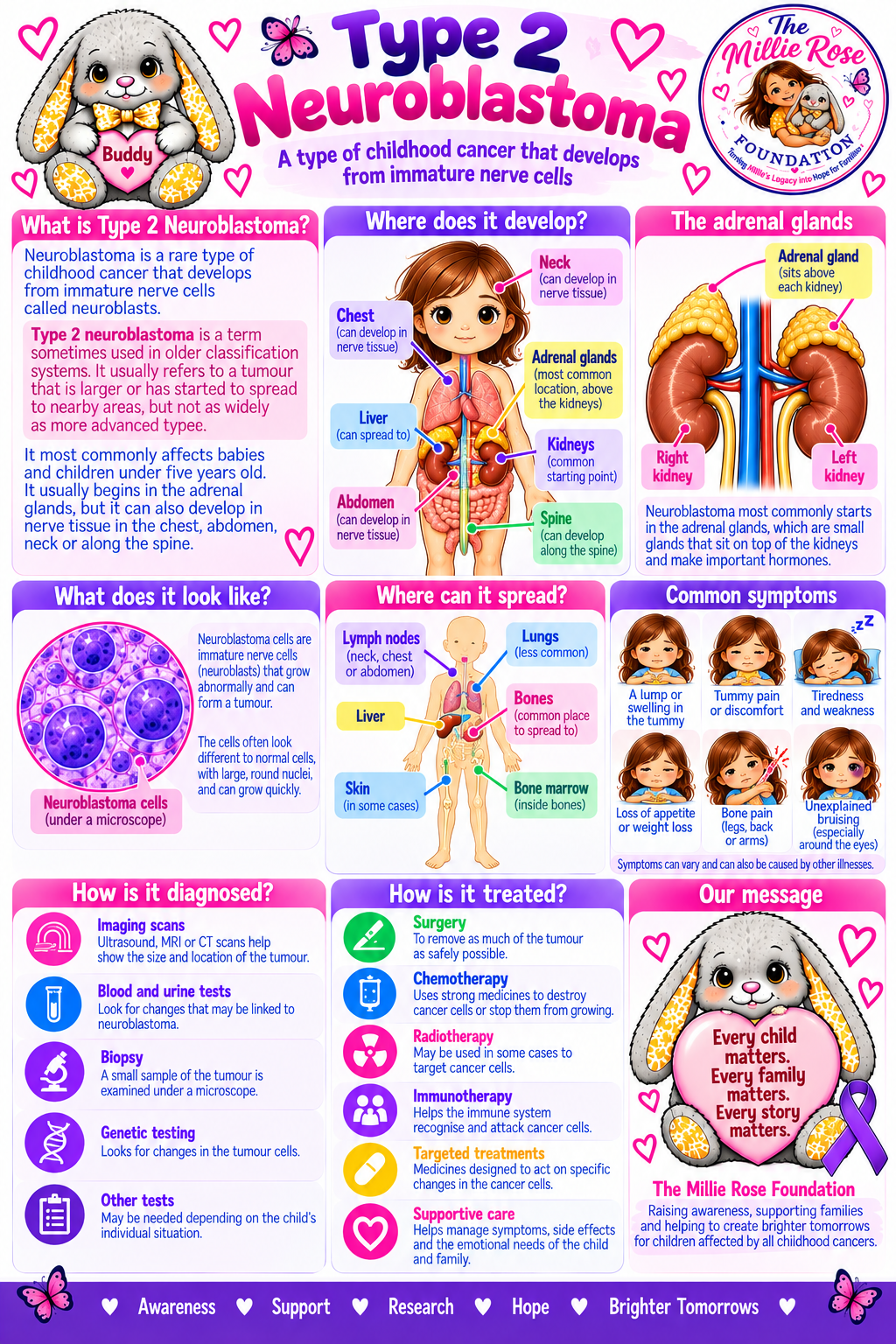
What is Type 2 Neuroblastoma?
Neuroblastoma is a rare type of childhood cancer that develops from immature nerve cells. It most commonly affects babies and children under five years old.
The term Type 2 neuroblastoma may be used in some older classification systems, but it is not a universally recognised modern classification. The exact meaning can depend on the medical system or source using the term.
Neuroblastoma often begins in the adrenal glands above the kidneys, but it can also develop in the chest, abdomen, neck or along the spine.
What happens in the body?
Neuroblastoma develops when immature nerve cells grow abnormally and form a tumour. Some tumours grow slowly, while others can grow quickly and spread to other parts of the body, such as the bones, liver, lymph nodes or bone marrow.
Doctors use scans and specialist tests to understand the tumour and decide which treatment is most suitable for each child.
What are the symptoms?
Symptoms depend on where the tumour develops and whether it has spread. They may include:
-
A lump or swelling in the tummy, chest or neck.
-
Tummy pain or discomfort.
-
Unusual tiredness or weakness.
-
Loss of appetite or unexplained weight loss.
-
Bone pain.
-
Unexplained bruising, sometimes around the eyes.
These symptoms can have many causes and do not automatically mean a child has cancer. Persistent or unexplained symptoms should be discussed with a healthcare professional.
How is neuroblastoma diagnosed?
Doctors may use several tests, including:
-
Scans: Ultrasound, MRI, CT or specialised scans to locate the tumour.
-
Blood and urine tests: To look for substances associated with neuroblastoma.
-
Biopsy: A sample of the tumour examined under a microscope.
-
Genetic testing: To identify changes that may help doctors understand the tumour and guide treatment.
Not every child will need every test.
How is it treated?
Treatment depends on the child's age, the tumour's location, its biological features and whether it has spread.
Treatment may include surgery, chemotherapy, immunotherapy, radiotherapy or other specialist treatments. Some children may need close monitoring rather than immediate intensive treatment.
Every child's treatment plan is individual, and their specialist team will explain the available options.
Raising awareness 💗
At The Millie Rose Foundation, we believe every child deserves the best possible care and every family deserves compassion and support.
By raising awareness of childhood cancers such as neuroblastoma, we hope to improve understanding, encourage continued research and support families facing difficult diagnoses.
In memory of Millie Rose Hedley, we remain committed to raising awareness of all childhood cancers and helping families feel less alone.
💗 Every child matters. Every family matters. Every story matters.
Please note: “Type 2 neuroblastoma” is not a universally used modern classification. If you have seen this term in a particular medical source, its exact meaning may depend on the classification being used. This blog is for general awareness and is not a substitute for medical advice.
Add comment
Comments