

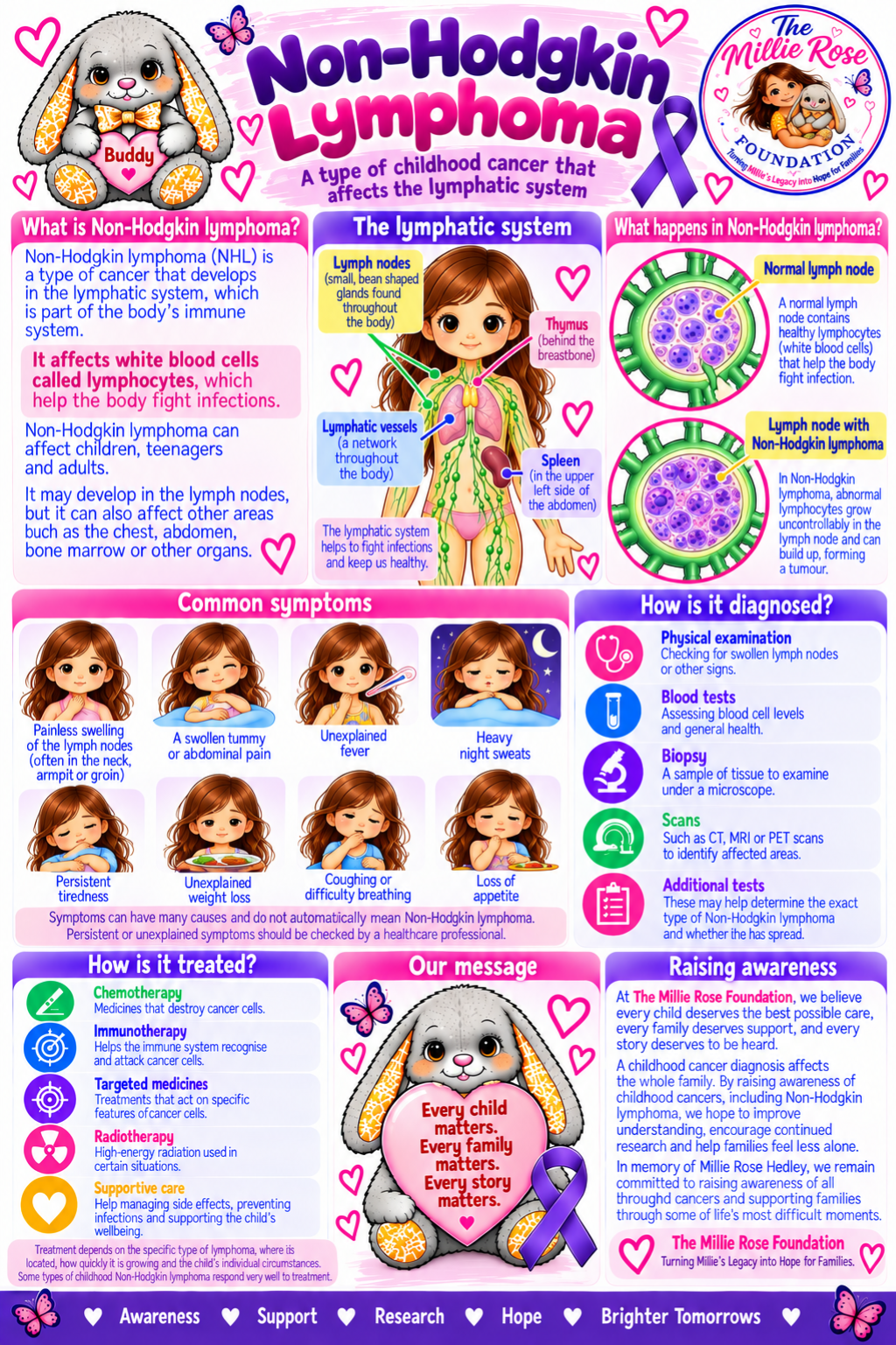
What is Non-Hodgkin lymphoma?
Non-Hodgkin lymphoma (NHL) is a type of cancer that develops in the lymphatic system, which is part of the body's immune system. It affects white blood cells called lymphocytes, which help the body fight infections.
Non-Hodgkin lymphoma can affect children, teenagers and adults. In children, it can sometimes grow quickly, so prompt diagnosis and treatment are important.
It may develop in the lymph nodes, but it can also affect areas such as the chest, abdomen, bone marrow or other organs.
What are the symptoms?
Symptoms can vary depending on where the lymphoma develops. They may include:
-
Painless swelling of the lymph nodes, often in the neck, armpit or groin.
-
A swollen tummy or abdominal pain.
-
Unexplained fever.
-
Heavy night sweats.
-
Unexplained weight loss.
-
Persistent tiredness.
-
Coughing or difficulty breathing.
-
Loss of appetite.
These symptoms can have many causes and do not automatically mean a child has lymphoma. However, persistent, unexplained or worsening symptoms should be checked by a healthcare professional.
How is Non-Hodgkin lymphoma diagnosed?
Doctors may carry out several tests to find out whether a child has lymphoma and understand which treatment may be needed.
These may include:
-
Physical examination: Checking for swollen lymph nodes or other signs.
-
Blood tests: Assessing blood cell levels and general health.
-
Biopsy: Taking a sample of tissue to examine under a microscope.
-
Scans: CT, MRI or PET scans to identify affected areas.
-
Additional tests: These may help determine the exact type of lymphoma and whether it has spread.
Not every child will need every test.
How is Non-Hodgkin lymphoma treated?
Treatment depends on the specific type of lymphoma, where it is located, how quickly it is growing and the child's individual circumstances.
Treatment may include:
-
Chemotherapy: Medicines that destroy cancer cells.
-
Immunotherapy: Treatments that help the immune system recognise and attack cancer cells.
-
Targeted medicines: Treatments that act on specific features of cancer cells.
-
Radiotherapy: High-energy radiation used in certain situations.
-
Supportive care: Help managing side effects, preventing infections and supporting the child's wellbeing.
Some types of childhood Non-Hodgkin lymphoma respond very well to treatment. Because different types behave differently, each child needs a treatment plan designed by a specialist team.
Raising awareness 💗
At The Millie Rose Foundation, we believe every child deserves the best possible care, every family deserves support, and every story deserves to be heard.
A childhood cancer diagnosis affects the whole family. Parents, brothers and sisters, grandparents and loved ones may all face uncertainty, fear and emotional challenges.
By raising awareness of childhood cancers, including Non-Hodgkin lymphoma, we hope to improve understanding, encourage continued research and help families feel less alone.
In memory of Millie Rose Hedley, we remain committed to raising awareness of all childhood cancers and supporting families through some of life's most difficult moments.
💗 Every child matters. Every family matters. Every story matters.
This information is for general awareness and educational purposes only. It is not a substitute for advice from a qualified healthcare professional.
Add comment
Comments