

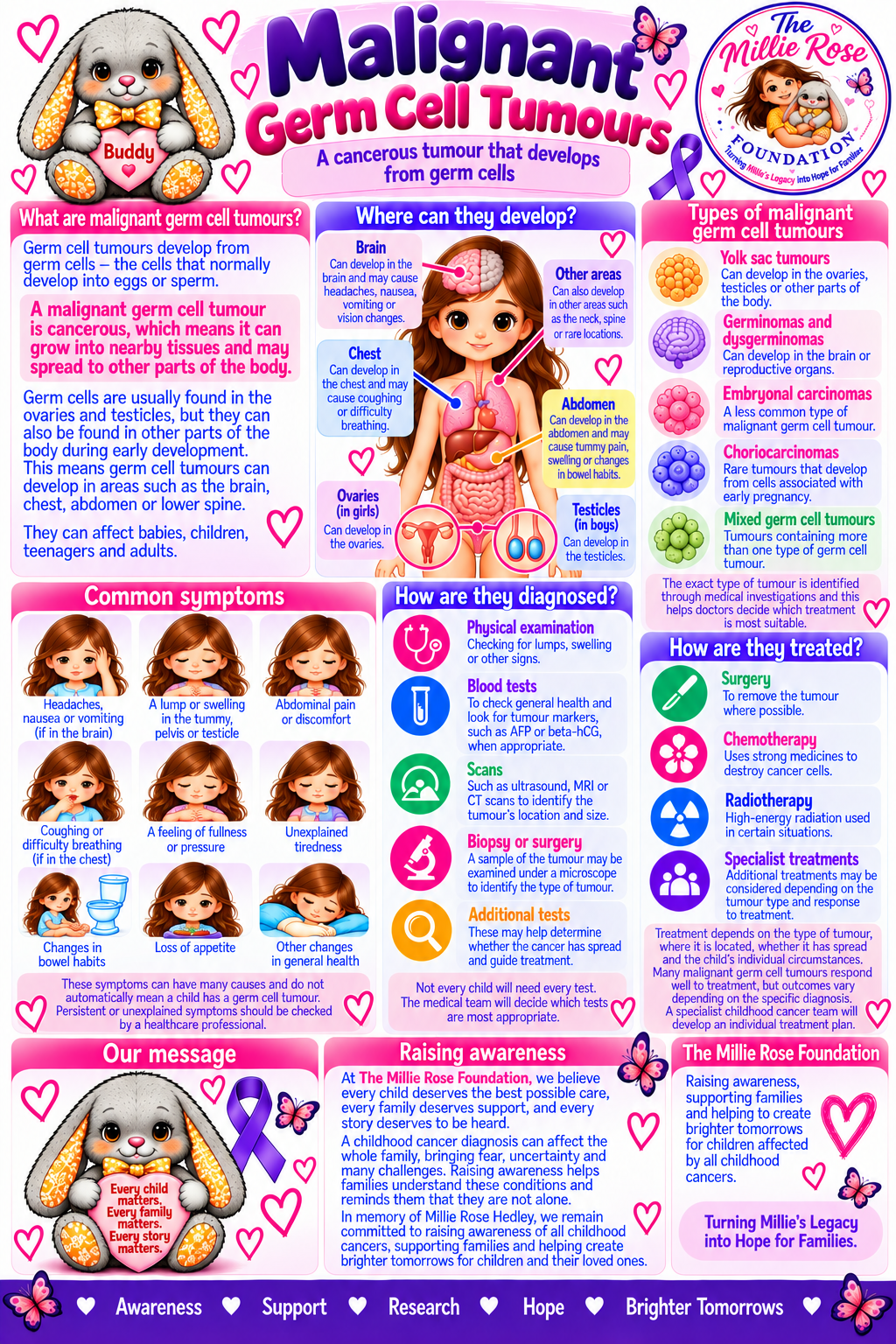
What are malignant germ cell tumours?
Germ cell tumours develop from germ cells — the cells that normally develop into eggs or sperm. These tumours can affect babies, children, teenagers and adults.
A malignant germ cell tumour is cancerous, which means it can grow into nearby tissues and, in some cases, spread to other parts of the body.
Although germ cells are usually found in the ovaries and testicles, they can sometimes be found in other parts of the body during early development. This means germ cell tumours can also develop in areas such as the brain, chest, abdomen or lower spine.
What types are there?
There are several types of malignant germ cell tumours, including:
-
Yolk sac tumours: A type of cancer that can develop in the ovaries, testicles or other parts of the body.
-
Germinomas and dysgerminomas: Tumours that can develop in the brain or reproductive organs.
-
Embryonal carcinomas: A less common type of malignant germ cell tumour.
-
Choriocarcinomas: Rare tumours that develop from cells associated with early pregnancy.
-
Mixed germ cell tumours: Tumours containing more than one type of germ cell tumour.
The exact type is important because it helps doctors decide which treatment is most suitable.
What are the symptoms?
Symptoms depend on where the tumour develops, its size and whether it has spread. They may include:
-
A lump or swelling in the tummy, pelvis or testicle.
-
Abdominal pain or discomfort.
-
A feeling of fullness or pressure.
-
Headaches, nausea or vomiting if the tumour develops in the brain.
-
Coughing or difficulty breathing if it develops in the chest.
-
Unexplained tiredness or changes in general health.
These symptoms can have many causes and do not automatically mean a child has cancer. Persistent or unexplained symptoms should be checked by a healthcare professional.
How are malignant germ cell tumours diagnosed?
Doctors may use several tests to understand the tumour and plan treatment, including:
-
Scans: Ultrasound, MRI or CT scans to identify the tumour's location and size.
-
Blood tests: To check general health and look for tumour markers, such as AFP or beta-hCG, when appropriate.
-
Biopsy or surgery: A tissue sample may be examined under a microscope to identify the type of tumour.
-
Additional tests: These may help doctors determine whether the cancer has spread.
Not every child will need every test.
How are they treated?
Treatment depends on the type of tumour, where it is located, whether it has spread and the child's individual circumstances.
Treatment may include:
-
Surgery: To remove the tumour where possible.
-
Chemotherapy: Medicines that destroy cancer cells.
-
Radiotherapy: High-energy radiation used in certain situations.
-
Specialist treatments: Additional treatments may be considered depending on the tumour type and response to treatment.
Many malignant germ cell tumours respond well to treatment, but outcomes vary depending on the specific diagnosis. A specialist childhood cancer team will develop an individual treatment plan.
Raising awareness 💗
At The Millie Rose Foundation, we believe every child deserves the best possible care, every family deserves support, and every story deserves to be heard.
A childhood cancer diagnosis can affect the whole family, bringing fear, uncertainty and many challenges. Raising awareness helps families understand these conditions and reminds them that they are not alone.
In memory of Millie Rose Hedley, we remain committed to raising awareness of all childhood cancers, supporting families and helping create brighter tomorrows for children and their loved ones.
💗 Every child matters. Every family matters. Every story matters.
This blog is for general awareness and educational purposes only. It is not a substitute for advice from a qualified healthcare professional.
Add comment
Comments